
Mar
If you’re growing comfrey for mulch, compost, or animal feed, knowing exactly which variety you have can make a big difference. Bocking 14 Comfrey is one of the most popular types thanks to its fast growth, high nutrient content, and non-invasive nature—but it’s often confused with common comfrey at first glance. While they may look similar, there are a few reliable visual cues that can help you tell them apart without needing lab tests or expert tools.
Identifying Bocking 14 Comfrey comes down to observing a handful of key traits, from leaf shape and texture to flower color and growth habit. By paying close attention to these details, you can quickly confirm whether your plant is the sterile, clump-forming variety gardeners prefer, or a spreading type that may require more control.
In this guide, we’ll walk through five simple visual signs to help you confidently identify Bocking 14 comfrey in your garden.
What Exactly Is Bocking 14 Comfrey?
Before we dive into the visuals, we need to talk about the “why” behind this plant. Bocking 14 is a specific strain of Russian Comfrey (Symphytum x uplandicum). It was developed in the UK by Lawrence Hills and the Henry Doubleday Research Association (HDRA) specifically for its high potassium content and its inability to produce seeds.
Think of it as a professional-grade garden tool that grows in the dirt. Because it is a sterile hybrid, it will not spread through the wind or bird droppings. It stays exactly where you put it unless you physically move a piece of the root. For a homeowner in places like Oregon or Pennsylvania, where plants grow fast, this sterility is a lifesaver.
Read more: Everything You Need to Know About Growing Bocking 14 Comfrey
How to Identify Bocking 14 Comfrey
1. Look Closely at the Flowers
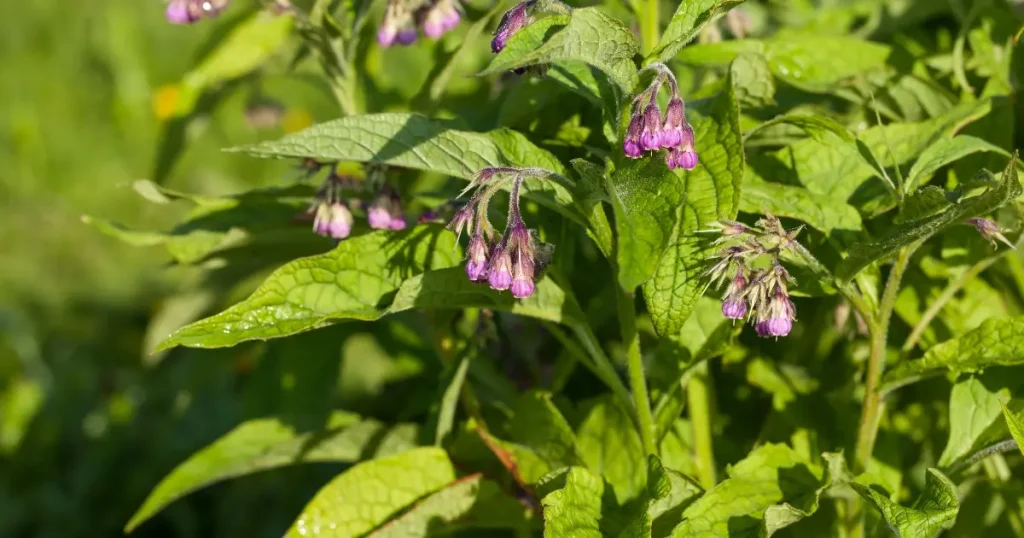
One of the simplest ways to identify Bocking 14 Comfrey is by observing its flowers when the plant is in bloom, typically from late spring to mid-summer in many regions. The flowers are small and bell-shaped, often appearing as pink or reddish buds that gradually open into a deeper purple or bluish-purple tone. While color can vary slightly depending on growing conditions, these richer hues are a good initial indicator.
If your plant produces flowers that are white, cream, or very pale yellow, it is more likely to be common comfrey (Symphytum officinale). This distinction matters, as common comfrey behaves quite differently in the garden and tends to spread more aggressively over time.
2. The Ultimate Test: Check for Seeds
If you want a more reliable way to confirm what you’re growing, take a closer look after the flowering period. This is where the key difference becomes much more obvious. Unlike seed-producing varieties, Bocking 14 Comfrey is sterile, meaning it does not produce viable seeds.
As the flowers fade, the stems will simply dry out and drop off without forming any hard seeds. In contrast, common comfrey will set seeds that can easily scatter and sprout nearby in the following season. If you start noticing new plants appearing around the original clump, that’s a clear sign you’re not dealing with Bocking 14.
This clump-forming, non-spreading habit is one of the main reasons Bocking 14 is so widely preferred—it stays where you plant it, making it much easier to manage in a home garden.
3. Leaf Texture and Winged Stems
Beyond flowers, the leaves and stems can offer another helpful clue when identifying Bocking 14 Comfrey. The leaves are typically large, elongated, and quite coarse to the touch, with a noticeably hairy surface. When handled gently, they may feel slightly rough, which is normal for comfrey varieties.
A more distinctive feature to look for is the “winged” stem. In hybrids like Bocking 14, the base of each leaf extends slightly down along the stem, forming a subtle ridge or wing-like structure. This creates a more continuous transition between leaf and stem. In contrast, common comfrey (Symphytum officinale) usually has leaves that attach more directly, without that extended ridge.
4. Growth Habit and Height
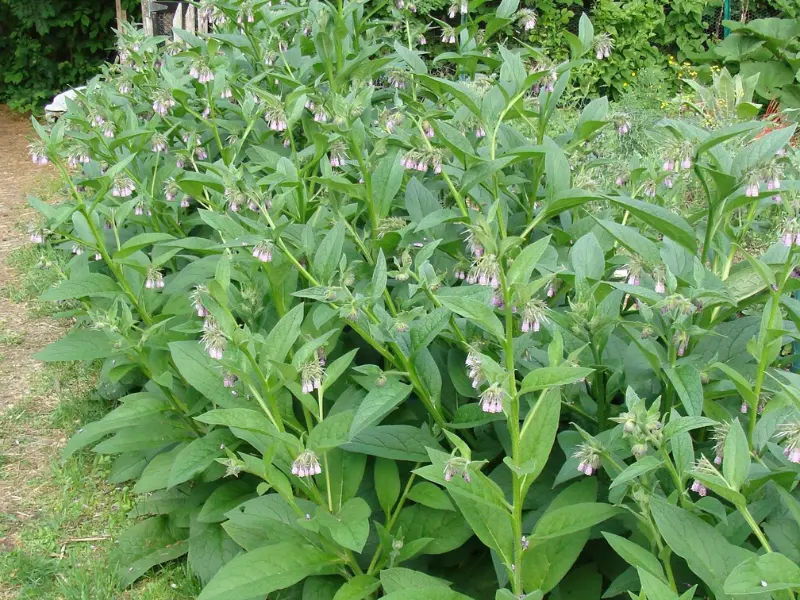
Growth pattern is another strong indicator. Bocking 14 Comfrey typically grows as a dense, upright clump and can reach around 3 to 4 feet tall under favorable conditions. It tends to stay compact in one place rather than spreading outward.
This clump-forming habit is supported by its deep taproot system, which helps the plant draw nutrients from lower soil layers. As a result, it often appears vigorous and full, especially when given adequate water and fertile soil.
If your plant appears sparse, low-growing, or spreads unpredictably across the garden, it may not be Bocking 14. Observing how the plant grows over time can be just as important as examining its physical features.
5. Why the Source Matters
Even with careful observation, the origin of your plant plays a crucial role in accurate identification. Because Bocking 14 Comfrey is a sterile hybrid, it cannot be grown from seeds. It is typically propagated through root cuttings or crown divisions.
This means that any product labeled as “Bocking 14 seeds” is unlikely to be genuine. To ensure you’re getting the correct variety, it’s best to source plants from reputable nurseries or growers who specialize in comfrey or permaculture plants. Starting with a reliable source helps avoid confusion later—and prevents accidentally introducing a spreading variety into your garden.
How to Use Your Bocking 14 Once You Have It
Once you have confirmed you have the real deal, it is time to put it to work. You can chop the leaves down 3 or 4 times a year and use them as:
-
Mulch: Lay them directly around your tomato plants for a potassium boost.
-
Compost Activator: Toss them into your bin to heat it up fast.
-
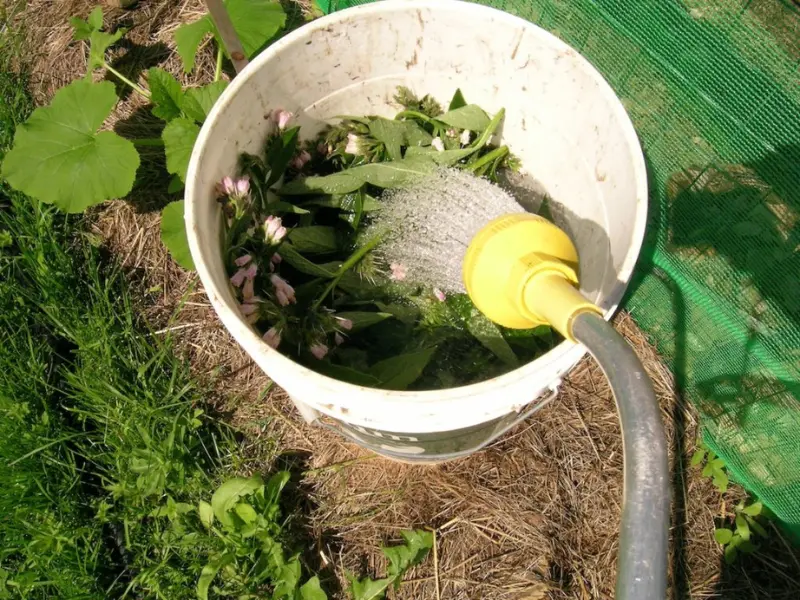
Liquid Fertilizer: Steep the leaves in a bucket of water for a few weeks (fair warning: it smells terrible, but your plants will love it).
Read more:
- The Comprehensive Guide to Russian Comfrey Benefits
- Comfrey Companion Planting: What to Grow Next to Your Comfrey Patch?
- The Comprehensive Guide to Russian Comfrey Benefits
- How to Propagate Comfrey from Root Cuttings: Easy Guide for Beginners
Frequently Asked Questions (FAQs)
Can I tell the difference before it flowers?
It is much harder. While leaf size is a hint, the flower color and the lack of seeds are the only 100% reliable ways to be sure.
Is Bocking 14 invasive in the US?
Technically, it is not considered invasive because it does not spread on its own. However, the roots are very hard to kill. If you dig it up and leave a tiny piece of root in the soil, a new plant will grow. Plan your spot wisely!
What USDA zones does it grow in?
It is incredibly hardy, usually thriving in zones 3 through 9. It can handle a cold Minnesota winter and a hot Georgia summer just fine.
Is it safe for my pets?
While comfrey has been used for centuries, it contains alkaloids that can be tough on the liver if eaten in large amounts. Most cats and dogs ignore it because of the scratchy, hairy leaves, but it is always good to keep an eye on curious nibblers.
Identifying Bocking 14 does not require a degree in botany, just a bit of patience and a close look at the details. By choosing the right plant, you get all the benefits of the world’s best fertilizer factory without the headache of a garden takeover.

How to Identify Bocking 14 Comfrey: 5 Simple Visual Signs
If you’re growing comfrey for mulch, compost, or animal feed, knowing exactly which variety you [...]
Mar
Grand Duke of Tuscany Jasmine: The Ultimate Guide to Growing a Fragrant Masterpiece
Have you ever caught a scent in the air so rich, creamy, and honey-sweet that [...]
Mar
How to Grow Wild Huckleberries: A Guide to “Purple Gold”
Have you ever spent a summer afternoon hiking through the Pacific Northwest or the Rocky [...]
Mar
5 Best Shade-Loving Perennials for a Lush, Vibrant Garden
The world of gardening often shines a spotlight on sun-drenched blossoms, but there is a [...]
Mar
7 Common Curry Leaf Plant Problems: Easy Fixes for a Thriving Plant
Is your curry leaf plant looking a bit sad lately? Maybe you woke up to [...]
Mar
Best Time to Plant Bougainvillea: Timing for Vibrant Blooms
If you’re looking for a hardy tropical vine that delivers a riot of neon color, [...]
Feb