
Apr
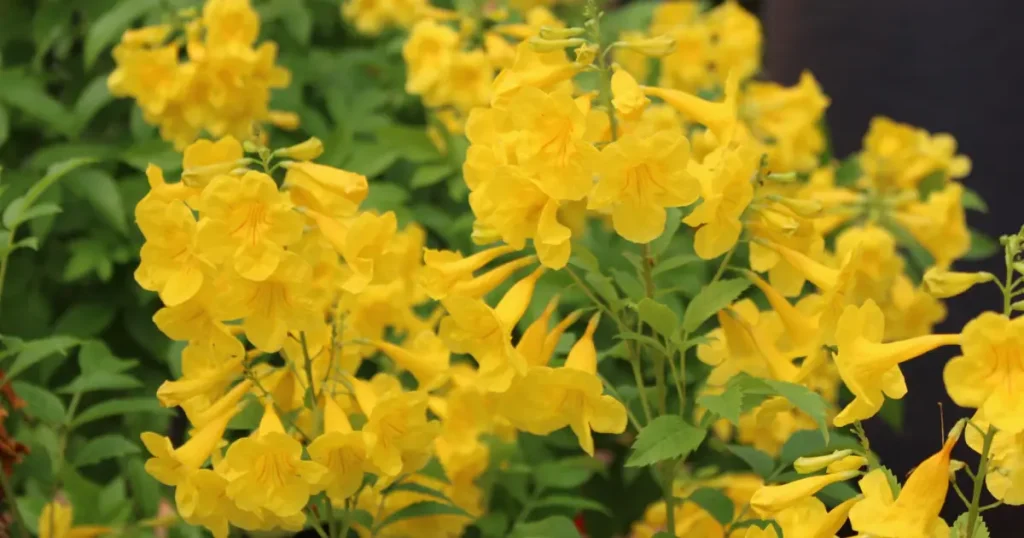
Esperanza Goldstar is more than just a heat-tolerant shrub; for the American gardener battling the scorching summer sun, it is a living burst of resilient, golden energy. While many are familiar with the common yellow elder that can grow tall and unruly, choosing the Tecoma stans ‘Goldstar’ cultivar brings a compact, heavy-blooming powerhouse directly into your landscape or patio containers.
If you are worried about your garden fading to brown when the July heatwaves hit or “killing” your curb appeal because you don’t have hours to spend watering, take a deep breath. Growing Esperanza Goldstar is not about constant hovering or complex horticultural secrets; it is about embracing a plant that actually performs better when the temperature rises. As a Texas Superstar winner, it simply needs the right sunlight and drainage to thrive.
In this guide, we will walk through the exact process of turning this sun-loving beauty into the most vibrant, fragrant highlight of your garden. No fluff, just the real steps that work for our North American climate, from the deserts of the Southwest to the humid Gulf Coast.
What is Esperanza Goldstar?
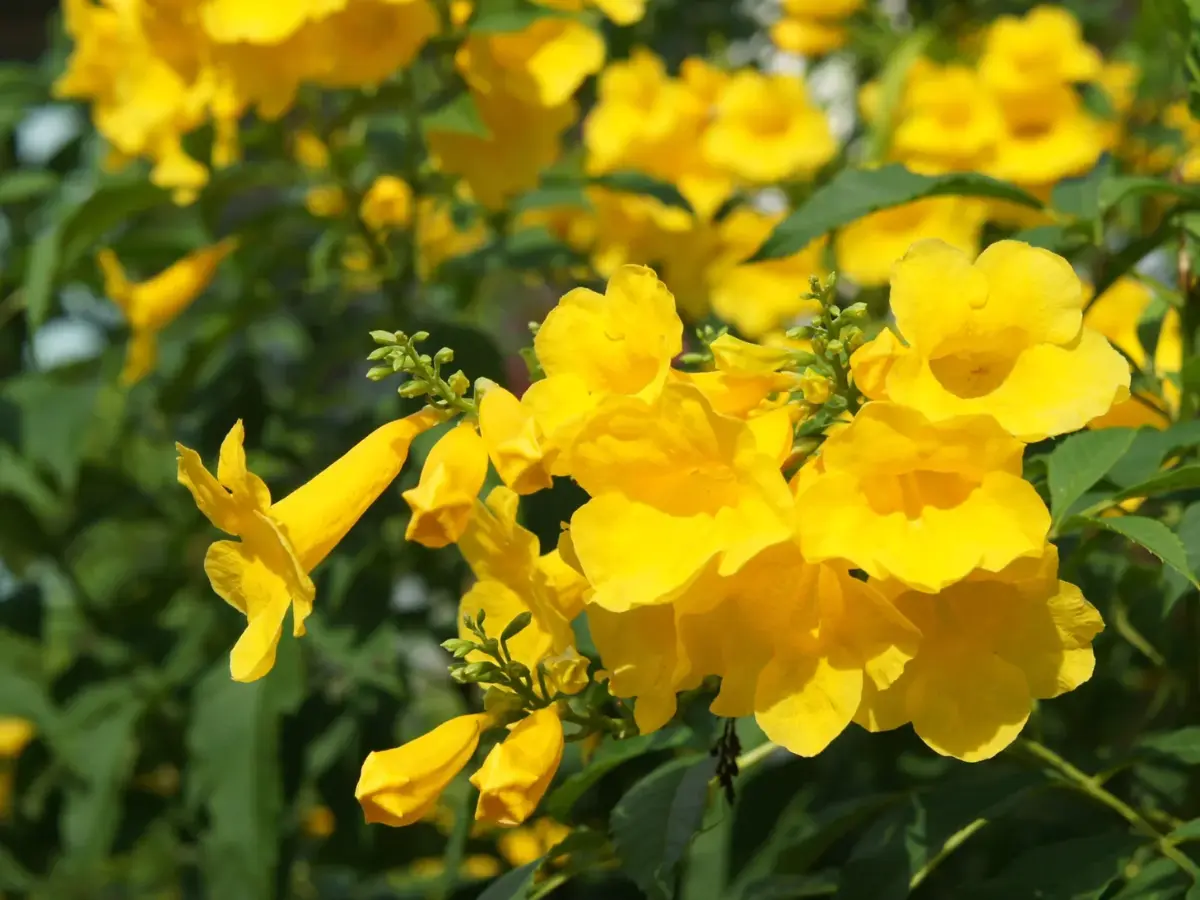
Esperanza Goldstar, also known as Yellow Bells or Tecoma stans, is not just a survivor; it is a showstopper. As someone who has spent years trialing heat-loving perennials in various American hardiness zones, I can tell you that this specific cultivar is a game-changer for your pollinator garden.
You might have heard of the Texas Superstar program. It is a title given only to plants that are tough, reliable, and beautiful enough to handle the unpredictable American climate. The Goldstar Esperanza earned this badge of honor because it blooms earlier and stays more compact than the wild Tecoma stans species.
Unlike the common yellow elder, which can sometimes get leggy and sparse, Goldstar stays dense with bright, trumpet-shaped flowers. It is a powerhouse for attracting hummingbirds and butterflies, making your garden feel alive even in the dead of July.
Planting Esperanza Goldstar
To get those iconic golden clusters, you need to think about location first.
Sunlight Requirements
If there is one thing this plant craves, it is full sun. I once helped a friend in Arizona who couldn’t figure out why her Esperanza was mostly green leaves with zero flowers. We realized it was stuck in the afternoon shadow of a large oak tree. Once we moved it to a spot with at least six to eight hours of direct sunlight, it exploded into color within weeks. If you want flowers, do not hide this plant in the shade.
Soil and Drainage
While Esperanza Goldstar is remarkably adaptable, its one true weakness is soggy soil. This plant belongs to the Bignoniaceae family and is native to rocky, arid regions. It needs well-draining soil to thrive. If you have heavy clay, I highly recommend planting it in a raised bed or amending the soil with organic matter and expanded shale to improve aeration.
How to Plant Esperanza Goldstar Step-by-Step
The best time to plant Esperanza Goldstar in the ground is in late spring or early summer after the danger of frost has passed.
-
Dig a hole twice as wide as the root ball but no deeper.
-
Gently remove the plant from its nursery pot. If the roots are circling, lightly tease them outward.
-
Place the plant in the hole, ensuring the top of the root ball is level with the surrounding soil.
-
Backfill with native soil and water deeply to settle any air pockets.
Growing Esperanza Goldstar
Watering
During the first growing season, water your Goldstar once or twice a week to help establish a deep root system. Once established, it can handle significant dry spells. However, if you want a constant carpet of yellow bells, deep watering every 10 to 14 days during the peak of summer will keep the plant from going into survival mode.
Fertilizing
You do not need to overcomplicate this. A balanced, slow-release fertilizer applied in early spring is usually enough. If you prefer organic options, a layer of high-quality compost around the base of the plant every year provides the nutrients needed for those lush, green leaves.
Pruning
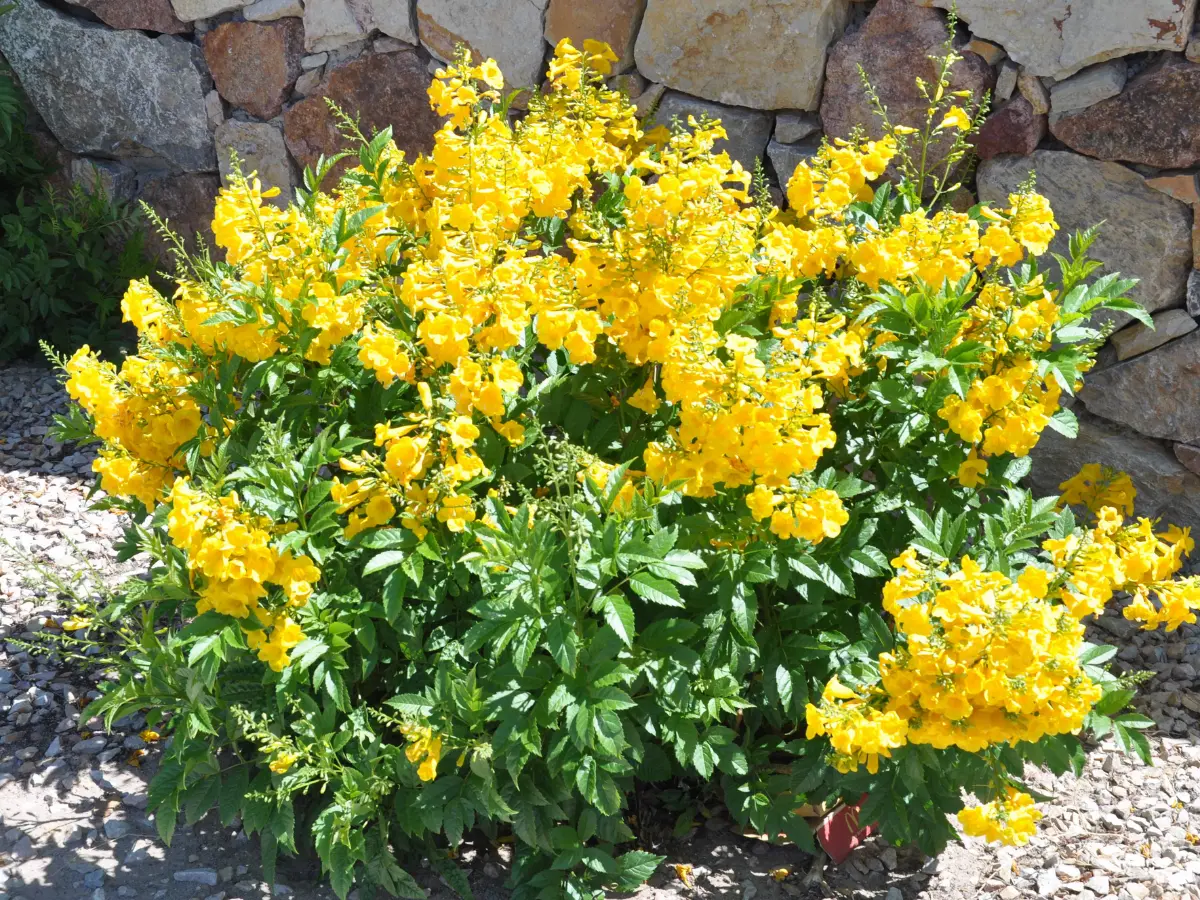
Goldstar Esperanza is naturally more compact than other varieties, but it still benefits from a “haircut.” In early spring, cut the plant back to about 12 inches above the ground. This removes any winter-damaged wood and encourages a flush of new, vigorous growth. Throughout the summer, you can “deadhead” or remove spent seed pods to keep the plant focused on producing flowers rather than seeds.
Winter Care
In USDA hardiness zones 9 through 11, Esperanza is a reliable perennial shrub. In zone 8, it often acts as a root-hardy perennial, meaning the top will die back to the ground in winter and regrow in spring.
If you live in a colder climate, treat it as a spectacular summer annual or plant it in a large container that can be moved indoors or into a garage during a hard freeze. Using a thick layer of mulch around the base in late autumn is a great way to protect the root zone from temperature swings.
Potting and Repotting Esperanza Goldstar
Growing Esperanza Goldstar in pots is an excellent alternative for smaller patios or sunrooms, and it is also highly recommended for gardeners in cooler climates who need to move the plant indoors when temperatures dip.
Choose a sturdy container with large drainage holes, at least 12 to 16 inches wide and deep, to accommodate its rapid root growth. Fill it with a high-quality, well-draining potting mix blended with a bit of organic compost. Keep in mind that potted Goldstars need more frequent watering, often daily during those intense summer heatwaves, because container soil heats up significantly and dries out much faster than garden soil.
Despite Esperanza being root-hardy in Southern regions, growing it in containers exposes its root system to more drastic freeze-and-thaw cycles. If you live in a marginal zone, the containers can stay outdoors during early winter, but you must protect the roots. You can do this by burying the entire pot in the ground or insulating the root zone by placing your container inside a second, larger pot to create a “planting silo” effect that buffers against the cold.
When the plant becomes root-bound, or the water starts to run straight through the pot without soaking in, it is time to repot your Esperanza Goldstar into a larger container or carefully divide the root ball to maintain its vigor.
Common Challenges: Pests and Troubles
Generally, this plant is quite hardy, but keep an eye out for whiteflies or aphids. These small insects usually appear if the plant is stressed. A simple blast of water from the hose or an application of insecticidal soap typically clears them up.
If your plant isn’t flowering, check two things: sunlight and nitrogen. Too much nitrogen fertilizer can lead to beautiful green foliage but very few blooms. Switch to a fertilizer with a higher middle number (phosphorus) to encourage flowering.
Landscape Design and Pollinators
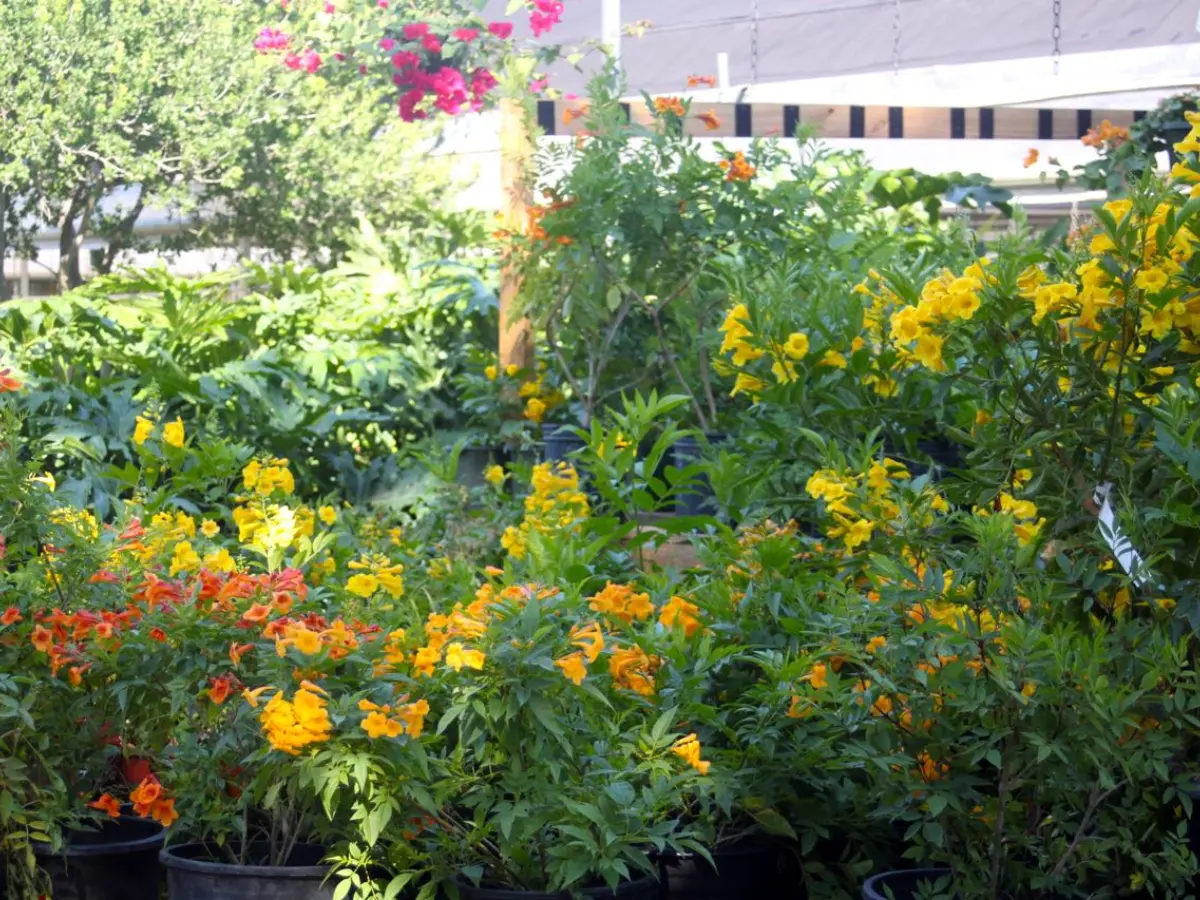
One of the joys of growing Esperanza Goldstar is the visitors it brings. It is a magnet for the Black-chinned Hummingbird and various swallowtail butterflies. To create a stunning landscape, pair your Goldstar with purple-flowering plants like Mexican Bush Sage or Mealycup Sage. The contrast of yellow and purple is a classic design choice that makes both colors pop.
Because it is a deer-resistant shrub, it is an excellent choice for open landscapes where hungry wildlife might otherwise treat your garden like a buffet.
Frequently Asked Questions (FAQs)
Is Esperanza Goldstar perennial or annual?
In the Southern US (zones 9-11), it is a perennial shrub. In cooler regions like the Midwest or Northeast, most gardeners grow it as a high-performance annual.
Is it toxic to pets?
While not listed as highly toxic, it is always best to discourage pets from chewing on garden plants. Most animals find the foliage unappealing anyway.
How fast does it grow?
Extremely fast! A small 1-gallon plant can easily reach 3 to 4 feet in height and width within a single growing season if given enough sun and water.
Can I grow it in a pot?
Yes. Just ensure the container has excellent drainage holes and use a high-quality potting mix. Be prepared to water container-grown plants more frequently than those in the ground.
Conclusion
Growing Esperanza Goldstar is one of the easiest ways to add reliable, high-impact color to your home. It solves the problem of the “summer slump” in the garden and provides a vital nectar source for local pollinators.
If you are ready to stop fighting the sun and start working with it, head to your local nursery and look for the Goldstar label. For more tips on selecting the right plants for your specific climate zone or setting up an efficient irrigation system, feel free to explore our other gardening guides. Your vibrant, heat-proof sanctuary is just one planting away.

Mastering Esperanza Goldstar: Grow the Ultimate Yellow Bloom
Esperanza Goldstar is more than just a heat-tolerant shrub; for the American gardener battling the [...]
Apr
Yellow Dragon Fruit Plant Care: The Ultimate Guide for Healthy Growth
The yellow dragon fruit plant is a unique and rewarding addition to any home garden, [...]
Apr
How to Identify Bocking 14 Comfrey: 5 Simple Visual Signs
If you’re growing comfrey for mulch, compost, or animal feed, knowing exactly which variety you [...]
Mar
Grand Duke of Tuscany Jasmine: The Ultimate Guide to Growing a Fragrant Masterpiece
Have you ever caught a scent in the air so rich, creamy, and honey-sweet that [...]
Mar
How to Grow Wild Huckleberries: A Guide to “Purple Gold”
Have you ever spent a summer afternoon hiking through the Pacific Northwest or the Rocky [...]
Mar
5 Best Shade-Loving Perennials for a Lush, Vibrant Garden
The world of gardening often shines a spotlight on sun-drenched blossoms, but there is a [...]
Mar