
Mar
Blog
How to Grow Wild Huckleberries: A Guide to “Purple Gold”
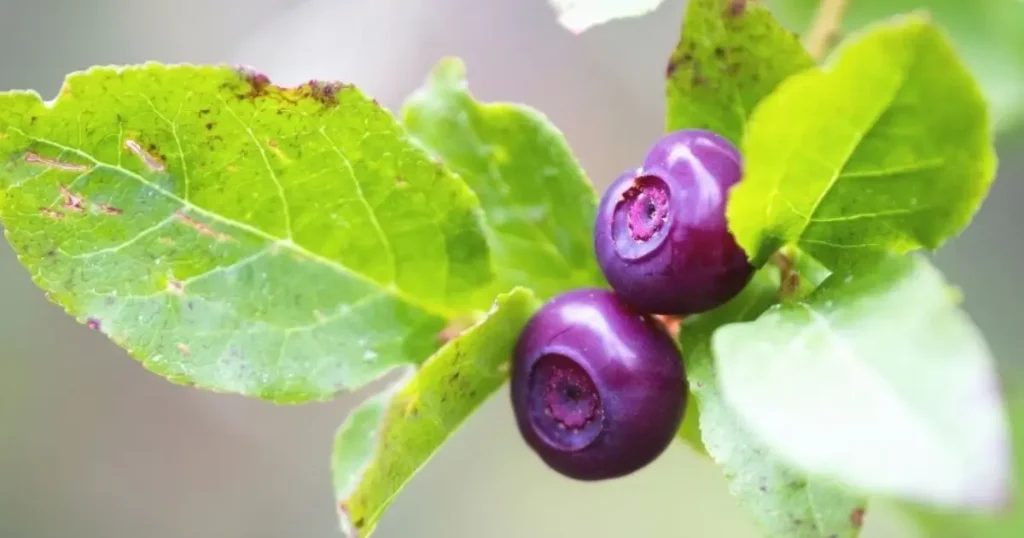
Have you ever spent a summer afternoon hiking through the Pacific Northwest or the Rocky Mountains, only to stumble upon a bush laden with tiny, dark gems? If you have tasted wild huckleberries, you know that a store-bought blueberry simply cannot compete. But here is the question that probably brought you here: Can you actually grow these elusive mountain treasures in your own backyard without them dying in a week?
I will be honest with you: growing wild huckleberries (Vaccinium membranaceum) is a bit of a challenge. Many gardeners try to transplant a bush from the woods only to watch it wither away. I have been there, and I have seen the frustration. However, once you understand the “secret language” of the soil and the unique needs of these ericaceous plants, you can successfully turn your garden into a berry sanctuary.
What are Wild Huckleberries?
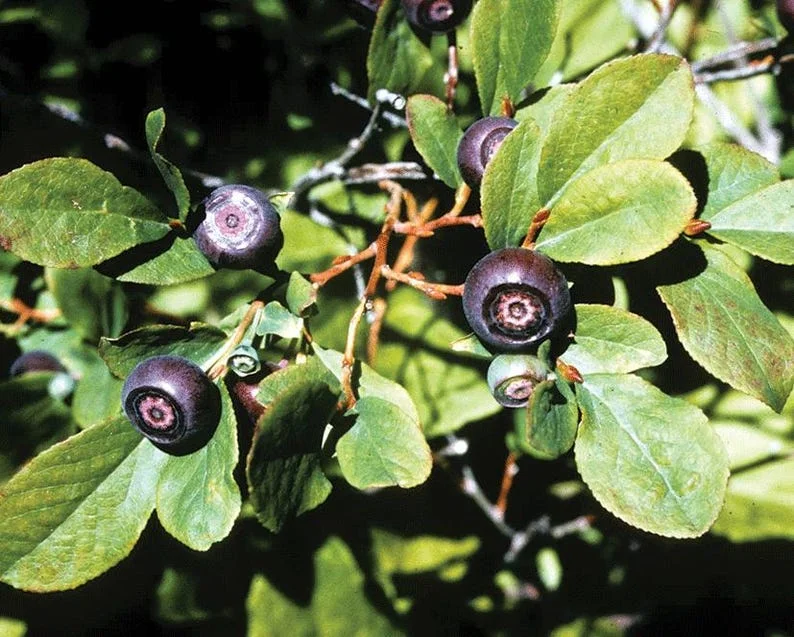
In the gardening world, we often call huckleberries “Purple Gold.” They are high-antioxidant powerhouses, packed with more flavor and punch than almost any other berry. But unlike strawberries or raspberries, you cannot just find huckleberry starts at every local big-box nursery.
These plants are deeply tied to their environment. They love high altitudes, acidic soil, and a very specific relationship with underground fungi. To grow them at home, we aren’t just planting a shrub; we are recreating a mountain ecosystem.
Read more: What are Wild Huckleberries? Discover the Secrets of This Delicious Berry
Ideal Growing Conditions
Before you dig a hole, you need to know if your climate is a match. Wild huckleberries thrive in USDA Hardiness Zones 4 through 8. They are tough plants that can handle cold winters, but they are picky about heat and humidity.
Best Temperature and Humidity
If you live in a place with scorching, dry summers and no shade, your huckleberries will struggle. In the wild, they often grow on mountain slopes where they get “dappled sunlight.” This means they want light that is filtered through taller trees, like pine or fir. If you are in a warmer zone, find a spot on the north side of your house or under a canopy of trees to keep the roots cool.
Soil Preparations
If there is one thing that kills huckleberries faster than anything else, it is the wrong soil pH. Most garden soil sits around a neutral pH of 7.0. Huckleberries will hate that. They need highly acidic soil, specifically between a pH of 4.3 and 5.2.
Think of it like this: if the soil isn’t acidic enough, the plant literally cannot “eat.” It cannot absorb the nutrients it needs to survive.
Creating the Perfect Mix
Don’t just use standard potting soil. To mimic the forest floor, I recommend a mix of:
-
Peat moss: This provides the acidity and moisture retention they crave.
-
Pine needles or aged sawdust: These act as a slow-release acidifier.
-
Perlite: To ensure the water drains away so the roots don’t rot.
One pro tip from my years of trial and error: Wild huckleberries rely on mycorrhizal fungi. These are tiny, beneficial fungi that live in the soil and help the roots take in water. When planting, it is a great idea to add a “native soil inoculant” or a bit of soil from a healthy forest (if legal in your area) to jumpstart this relationship.
How to Plant Wild Huckleberries
You have two main paths to becoming a huckleberry grower: starting from seed or buying nursery stock.
Wild Huckleberries from Seeds (The Patient Way)
Huckleberry seeds require cold stratification. In nature, the seeds sit under the snow all winter before they wake up in the spring. To do this at home, you need to put your seeds in a damp paper towel inside a sealed bag and keep them in your refrigerator for about 60 to 90 days. This “tricks” the seed into thinking winter is over.
Wild Huckleberries from a Starter Plant
I usually suggest buying established plants from a specialized native plant nursery. Look for plants that are at least 1 to 2 years old. A quick warning: Do not try to dig up a wild bush from a national forest. Not only is it often illegal, but huckleberries have very deep, sensitive taproots. When you dig them up, you almost always break the root system, and the plant rarely survives the move.
How to Plant
-
Test your soil: Buy a cheap pH tester. If your soil is above 5.5, mix in elemental sulfur or plenty of peat moss weeks before planting.
-
Dig a wide hole: The roots like to spread out. Make the hole twice as wide as the root ball but no deeper.
-
Planting: Set the bush in the hole and fill it with your acidic soil mix. Firm it down gently with your hands, not your boots.
-
Mulch is mandatory: Cover the base with 2 or 3 inches of pine bark or pine needles. This keeps the soil cool and acidic.
How to Care for Wild Huckleberries
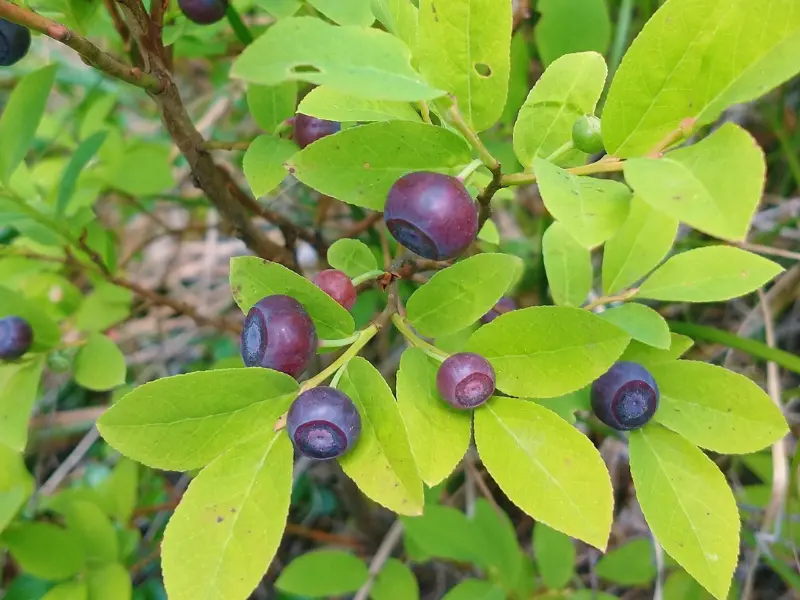
Huckleberries are slow growers. Do not expect a massive harvest in the first year. In fact, it usually takes 3 to 5 years for a young bush to establish its root system and start producing significant fruit. If you see a few berries in year two, consider it a lucky bonus!
Watering
Huckleberries have shallow, delicate root systems. They hate “wet feet” but perish in a drought.
Keep the soil moist but not soggy. Think “mountain mist,” not “swamp.” During the first two summers, your plants will need consistent watering to establish their roots.
During the first two summers, your plants are incredibly vulnerable. They need consistent watering to prevent the roots from drying out.
Apply a 2-3 inch layer of pine needles, composted sawdust, or peat moss. This mimics the forest floor, keeps the roots cool, and maintains that acidic pH they crave.
Fertilizer
Here is a surprise that catches many gardeners off guard: Skip the traditional 10-10-10 fertilizer. * The Nitrogen Trap: Most standard garden fertilizers contain nitrogen in a form (nitrates) that can actually be toxic to huckleberries.
If you must feed them, use a very light application of an organic fertilizer designed for blueberries or azaleas in early spring. These are formulated to maintain the acidic soil environment (pH 4.5 to 5.5) that these plants require to absorb nutrients.
Pruning and Shaping
In the wild, huckleberries are “pruned” by winter snow loads and the occasional browsing deer. In your garden, less is definitely more.
Avoid pruning altogether. Let the plant put every ounce of energy into its foliage and roots.
Once established, only prune in late winter while the plant is dormant. Remove dead, diseased, or broken wood.
If the bush becomes too dense, thin out a few older canes to the ground to encourage new, more productive growth. Remember: huckleberries fruit on wood that is at least a year old, so don’t give it a “buzz cut” or you’ll lose your harvest!
Propagating Wild Huckleberries
Since you can’t easily find these at your local big-box nursery, you might want to try making more of them yourself.
In late winter, take 6-inch cuttings from dormant wood. Dip them in rooting hormone and place them in a mix of peat and perlite. Keep them humid and cross your fingers; success rates can be low, but it’s rewarding when it works.
You can try to use the Layering method. This is often more successful. Bend a low-growing branch down to the ground, nick the bark slightly, and bury that section under the soil (leaving the tip exposed). Pin it down and wait a full year for it to develop its own roots before clipping it from the “mother” plant.
Common Problems and Solutions
Yellowing Leaves (Chlorosis)
If the leaves turn pale yellow while the veins stay dark green, your soil is likely too alkaline. Huckleberries can’t “digest” iron unless the soil is acidic.
Test your soil pH. If it’s above 5.5, mix in some elemental sulfur or dress the base with fresh peat moss to boost the acidity.
Dropping Blossoms or Fruit
It’s heartbreaking to see flowers fall off before they turn into berries. This usually happens due to a late spring frost or a lack of local pollinators.
Cover your bushes with a frost blanket on cold spring nights. To help with pollination, avoid pesticides and plant multiple bushes to attract more bees to the area.
Wilted Tips and Root Rot
If the new growth wilts, the roots are likely stressed. This is caused by either extreme drought or “wet feet” from poor drainage.
Ensure your soil drains well but stays consistently moist. Keep a 3-inch layer of mulch (like pine needles) around the base to stabilize moisture, but keep it an inch away from the wooden stem to prevent rot.
Vanishing Berries
As soon as those berries turn purple, you are in a race against birds, squirrels, and deer.
Don’t wait for them to ripen! Drape fine bird netting over your bushes as soon as the berries turn pink. Secure the netting at the ground so clever critters can’t crawl underneath.
How to Harvest Wild Huckleberries
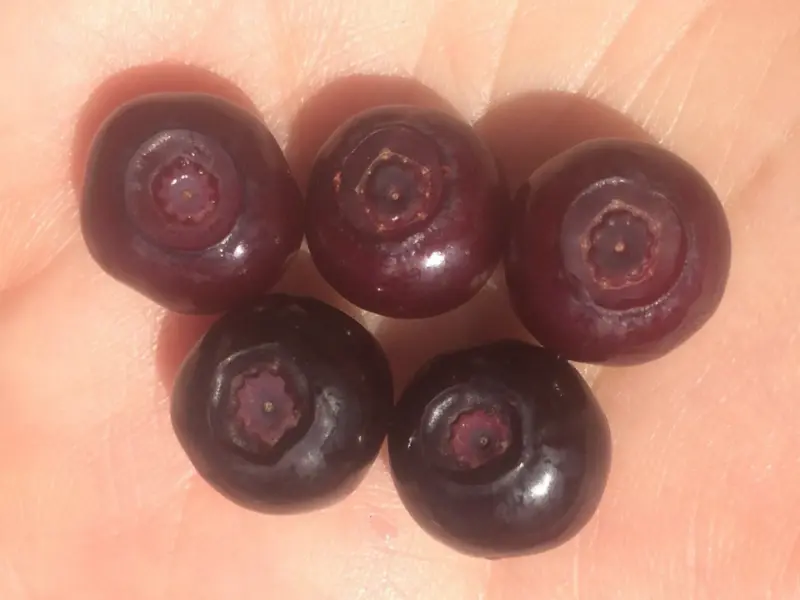
Once those berries start turning that beautiful, deep purple, you aren’t the only one watching. In the wild, they are the “soul food” of the forest. Birds, squirrels, and even deer are master huckleberry hunters. To ensure you actually get to taste your harvest, bird netting is a must as the fruit begins to ripen.
The best time to harvest is in late summer. Don’t rush it, huckleberries are sweetest when they are duller in color and slightly soft to the touch. Give the berry a gentle tug; if it stays on the branch, it needs another day or two to reach its peak “purple gold” flavor.
Frequently Asked Questions (FAQs)
Can I grow wild huckleberries in pots?
Yes, you can. In fact, if your backyard soil is very alkaline (high pH), growing in a large container is actually easier because you have total control over the soil mix. Use a pot with excellent drainage.
How much sun do they really need?
In cooler climates, they can handle full sun. In hotter areas, they definitely need afternoon shade. If the leaves start looking scorched or brown at the edges, they are getting too much direct heat.
Do I need two plants to get berries?
While many huckleberries are self-fertile, you will almost always get a bigger harvest and larger berries if you have at least two different plants for cross-pollination.
Why are my huckleberry leaves turning red in August?
If it is late summer, this might be a sign of heat stress or lack of water. However, in the fall, it is perfectly normal for the leaves to turn a stunning vibrant red before they drop for the winter.
Read more:
- 7 Common Curry Leaf Plant Problems: Easy Fixes for a Thriving Plant
- Best Time to Plant Bougainvillea: Timing for Vibrant Blooms
- 7 Expert Tips to Grow Lush Ivy Indoors: A Beginner’s Guide
Final Thoughts
Growing wild huckleberries is a journey that requires patience, but the reward is a flavor that you simply cannot buy in a store. By focusing on acidic soil and the right amount of shade, you can bring a piece of the mountain wilderness into your garden.
Are you ready to start your own berry patch? If you found this guide helpful, check out our other articles on how to test soil pH at home or the best companion plants for acidic soil to make sure your garden is ready for success. Happy planting!

How to Grow Wild Huckleberries: A Guide to “Purple Gold”
Have you ever spent a summer afternoon hiking through the Pacific Northwest or the Rocky [...]
Mar
5 Best Shade-Loving Perennials for a Lush, Vibrant Garden
The world of gardening often shines a spotlight on sun-drenched blossoms, but there is a [...]
Mar
7 Common Curry Leaf Plant Problems: Easy Fixes for a Thriving Plant
Is your curry leaf plant looking a bit sad lately? Maybe you woke up to [...]
Mar
Best Time to Plant Bougainvillea: Timing for Vibrant Blooms
If you’re looking for a hardy tropical vine that delivers a riot of neon color, [...]
Feb
How to Propagate Purple Passion Plants (Gynura aurantiaca)
Have you ever been mesmerized by the neon-purple glow and fuzzy, velvet-like leaves of a [...]
Feb
How to Grow Beauregard Sweet Potatoes: From Slips to a Bountiful Harvest
Are you ready to add a classic, heavy-hitting favorite to your vegetable patch? If you’ve [...]
Feb