
Apr
Are you staring at a bougainvillea that is all lush green leaves but hasn’t shown a single splash of color in months? Do you look at your neighbor’s vibrant, neon-pink vines cascading over their fence and wonder what secret potion they are using?
Believe me, I have been there. A few years ago, I bought a gorgeous Bougainvillea spectabilis for my patio in Florida. I watered it every day, gave it plenty of “premium” plant food, and pampered it like a newborn. The result? A massive green bush that looked like a common hedge. It took a long chat with an old-school nursery owner to realize I was actually killing my blooms with kindness.
Bougainvillea plants aren’t like your typical garden flowers. They are tough, sun-loving survivors from the Nyctaginaceae family that actually thrive on a bit of neglect. If you want those legendary “paper flowers” to take over your garden, you need to change your strategy. Here is exactly Bougainvillea Plant care tips to trigger a massive bloom cycle.
1. Location is Everything: The Power of Full Sun
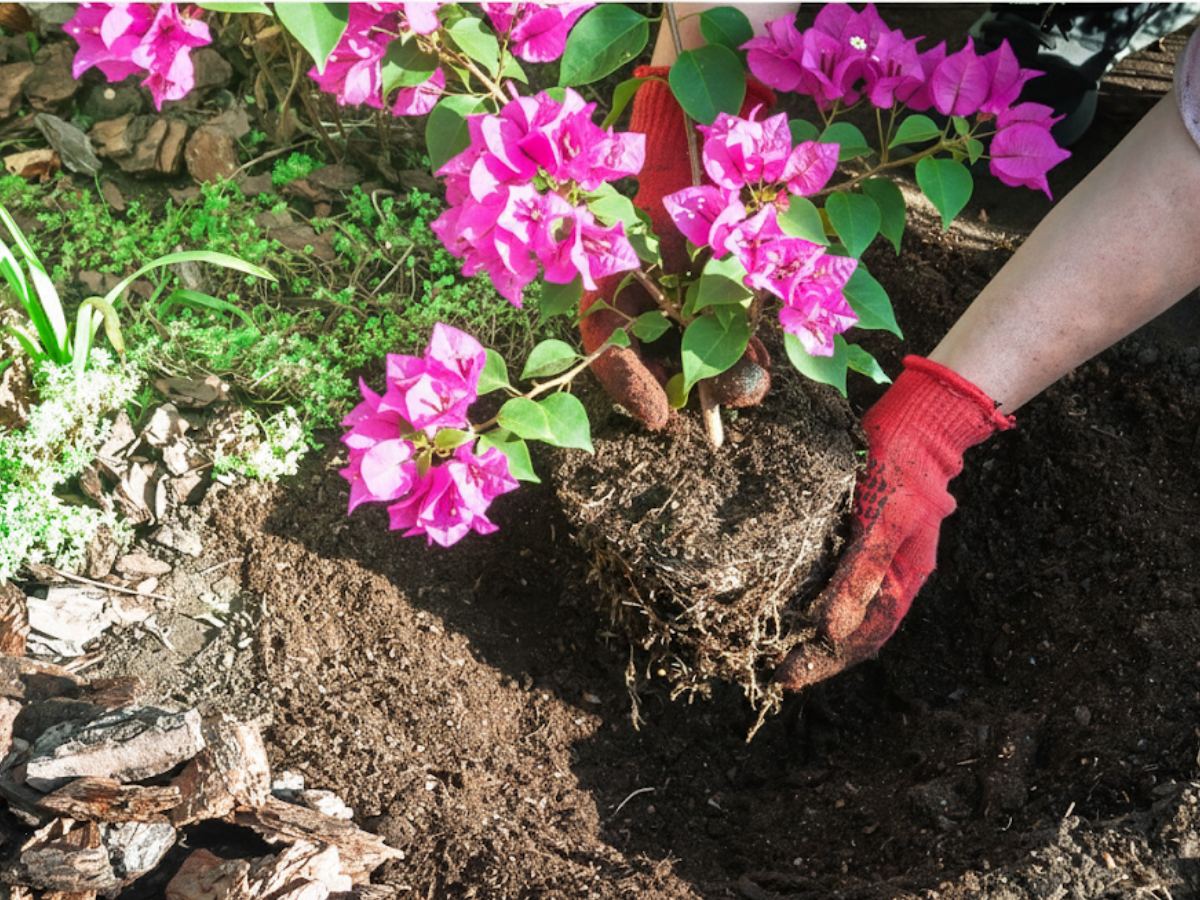
If your bougainvillea isn’t blooming, the first thing I will ask you is: “How many hours of direct sun does it get?”
In the United States, especially if you are in USDA Hardiness Zones 9 to 11, like Southern California or Texas, light is your best friend. These plants are native to South America and are built for intense heat. To get those colorful bracts (which are actually modified leaves, not the tiny white flowers inside), your plant needs at least 6 to 8 hours of direct, unobstructed sunlight every single day.
If it is sitting in partial shade, it will stay in a vegetative state—meaning it will just grow more stems and leaves. If you have it in a pot, move it to the hottest, brightest spot on your deck. If it’s in the ground and shaded by a tree, it might be time for some strategic pruning of that tree to let the light in.
You may like to read: Best Time to Plant Bougainvillea: Timing for Vibrant Blooms
2. Strategic Watering: The “Tough Love” Method
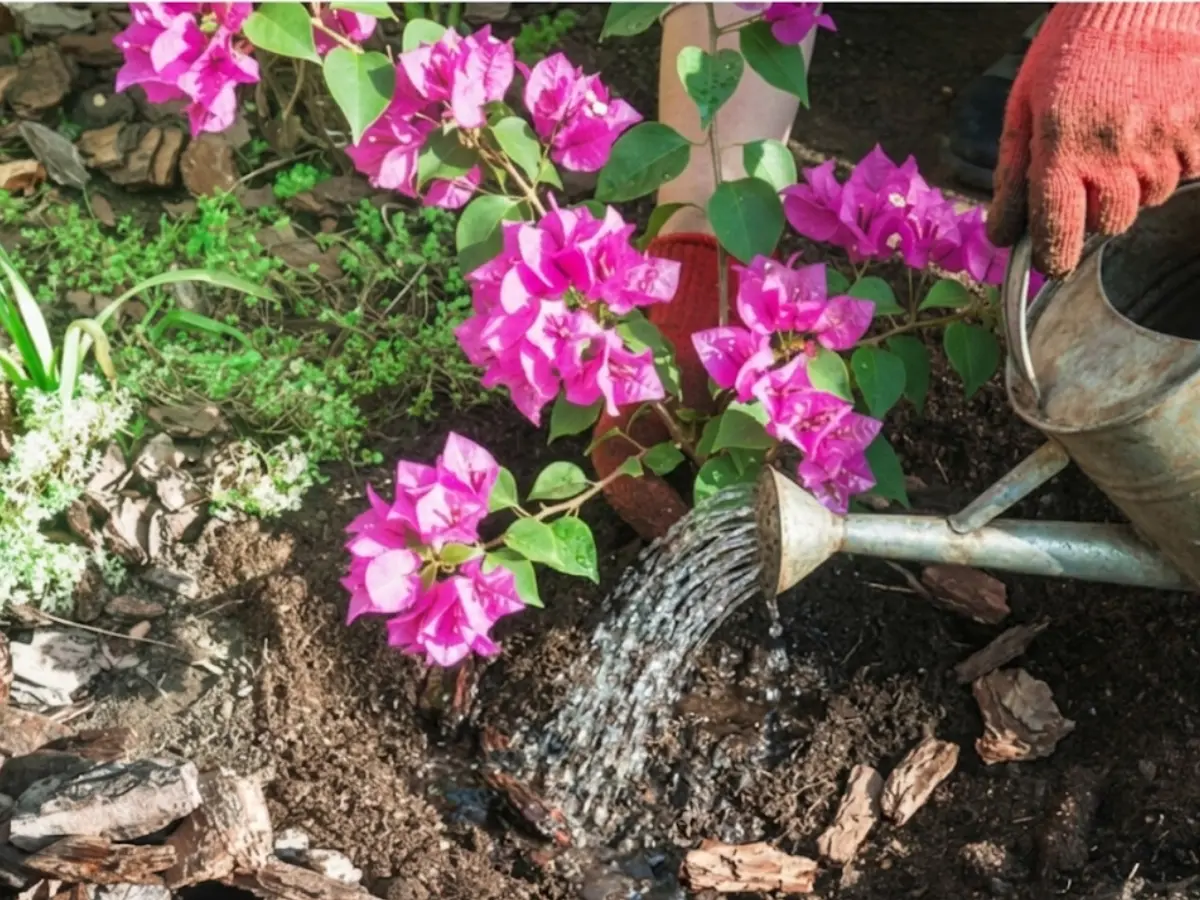
Here is the part that surprises most people: Bougainvillea plants hate “wet feet.” In fact, giving them too much water is the fastest way to stop them from flowering.
Think about their natural Mediterranean-style climate. They love a good soak followed by a period of drought. To trigger a bloom, you should let the soil dry out almost completely. Wait until you see the leaves just starting to slightly wilt; that is the plant’s signal that it’s stressed.
Stress leads to flowers. When the plant thinks resources are scarce, its survival instinct kicks in, and it produces seeds and flowers to reproduce. If you keep the soil constantly moist, the plant stays “happy” and just keeps growing green. Once you see the flower buds forming, you can resume a more regular watering schedule, but never let it sit in a puddle.
3. Fertilizing for Flowers, Not Foliage
A common mistake I see at the local garden center is people buying “All-Purpose” fertilizer with a high Nitrogen count. Nitrogen is great for grass, but for bougainvillea, it’s bloom-killer.
High Nitrogen (the first number on the NPK bag) promotes leaf growth. For explosive blooms, you want a Bloom Booster or a fertilizer high in Phosphorus and Potassium. Look for a ratio where the middle and last numbers are higher.
I personally recommend using a slow-release organic fertilizer twice a year—once in early spring and once in mid-summer. Also, ensure your soil has enough Iron and Magnesium. If the leaves are turning yellow with green veins (chlorosis), a dose of Epsom salts (magnesium sulfate) can work wonders to bring back the vibrancy.
4. Pruning Techniques to Encourage New Growth
Did you know that bougainvillea plants only bloom on “new wood”? This means that if you have long, old, woody branches that haven’t been touched in years, they won’t produce much color.
Tip Pinching: This is a simple trick. After a bloom cycle fades, pinch off the ends of the soft new growth. This forces the branch to fork out, creating more tips, and more tips mean more flowers.
Hard Pruning: If your vine is getting out of control, don’t be afraid to cut it back hard in late winter or early spring. This stimulates a flush of fresh, flowering growth. Just be careful—those thorns are no joke! Wear thick gloves and use sharp, clean bypass pruners to avoid tearing the stems.
5. Potting and Root Management
Interestingly, bougainvilleas are one of the few plants that actually enjoy being a little crowded. If you are growing them in containers, don’t rush to move them into a massive pot.
When a bougainvillea is root-bound, it limits its leafy growth and focuses its energy on flowering. If you do need to repot because the roots are pushing through the drainage holes, only go up one size. Always use a well-draining potting mix. A mix designed for cacti or succulents often works well because it prevents the root rot that bougainvilleas are so susceptible to.
6. Understanding Temperature and Soil pH
If you live in a place like Arizona or Florida, your soil might be naturally alkaline. Bougainvillea plants prefer a slightly acidic soil pH (between 5.5 and 6.5). If your soil is too alkaline, the plant can’t take up the nutrients it needs to bloom. You can add a bit of sulfur or use an acidic mulch like pine needles to help balance it out.
As for temperature, these are tropical plants. They love the heat but will drop their leaves if the temperature dips below 40 degrees Fahrenheit. If a surprise frost is coming to your area, cover them with a frost blanket or bring your pots inside the garage for the night.
7. Common Troubleshooting: Pests and Issues
Even the toughest plants have enemies. Keep an eye out for Bougainvillea Loopers—small green caterpillars that can strip the leaves overnight. If you see jagged edges on your leaves, they are likely the culprit. An organic spray like Bt (Bacillus thuringiensis) usually clears them up without harming beneficial insects.
Also, watch out for aphids on the soft new growth. A quick blast with a garden hose or a bit of neem oil is usually all you need.
Frequently Asked Questions (FAQs)
Why are my bougainvillea leaves falling off?
This usually happens due to a sudden change in temperature or overwatering. If the stems are still green and firm, don’t panic. Adjust your watering, and the leaves will likely grow back once the plant stabilizes.
How long does a bloom cycle last?
A good bloom cycle can last anywhere from 4 to 6 weeks. After that, the plant will take a “rest” period to grow more foliage before starting the next cycle.
Can I grow bougainvillea as a ground cover?
Absolutely! While we often see them climbing trellises or walls, they make excellent, colorful ground covers for slopes or large open areas in sunny spots.
Do bougainvilleas need a lot of maintenance?
Once established, they are incredibly low-maintenance. The biggest “job” you have is making sure you don’t over-care for them. Remember: Sun, dry soil, and the right fertilizer are the keys to success.
Final Thoughts
Growing bougainvillea plants is more about understanding their personality than having a “green thumb.” It’s a plant that rewards a bit of neglect and a lot of sunshine. By pulling back on the water, choosing the right fertilizer, and giving it a good haircut now and then, you’ll have a garden that is the talk of the neighborhood.
If you enjoyed these tips, check out our other guides on sustainable gardening and choosing the best tropical plants for your hardiness zone. Now, grab your pruners and go give that bougainvillea some “tough love”!
You may like:

How to Grow Arbequina Olive Trees: The Ultimate Guide to Your Own Olive Grove
Arbequina Olive Tree (Olea europaea ‘Arbequina’) – the ultimate Mediterranean plant that brings a touch [...]
Oct
Growing Garlic in Containers This Fall: A Complete Guide for Beginners
If you’ve ever wanted to pop fresh, aromatic garlic cloves straight from your own patio [...]
Sep
Growing Camellia Sinensis (Tea Plants) in Containers: A Complete Guide for Beginners
If you’ve ever wanted to sip a steaming, homegrown cup of fresh green, black, or [...]
Aug
6 Best Shrubs to Plant in August You Must Try
Have you ever walked through a nursery late in the summer, admired the vibrant shrubs [...]
Aug
Growing Everbearing Strawberries in Containers: A Complete Guide for Beginners
Want to grow sweet, fresh strawberries but do not have a large garden? Everbearing strawberries [...]
Aug
Growing Egyptian Walking Onions in Containers: A Complete Guide for Beginners
If you’re looking for a hardy, no-fuss perennial onion that keeps on giving year after [...]
Jul