
Aug
Guides
Growing Everbearing Strawberries in Containers: A Complete Guide for Beginners
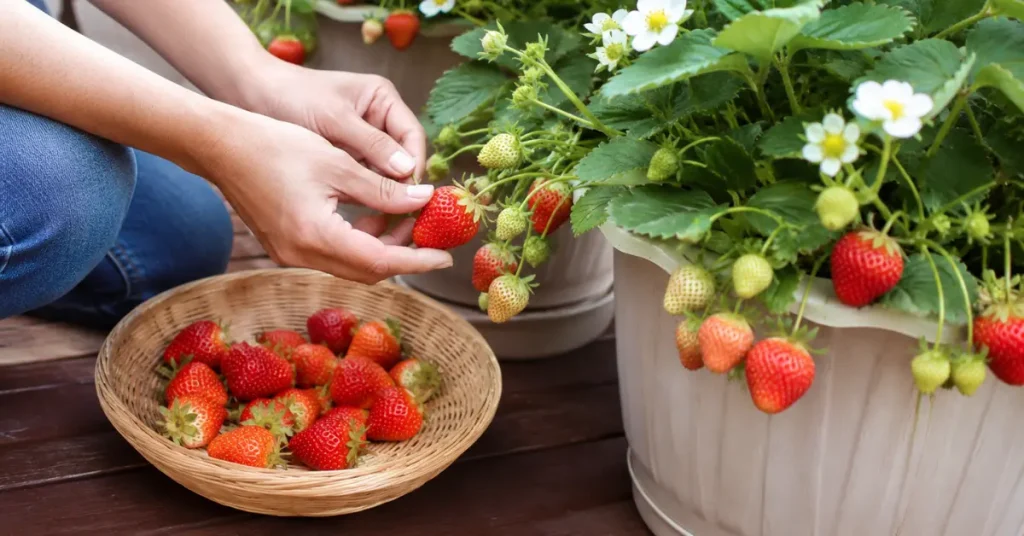
Want to grow sweet, fresh strawberries but do not have a large garden? Everbearing strawberries are a great choice for containers because they stay compact and can produce several harvests from late spring through early fall. With the right pot, soil, sunlight, watering routine, and simple care, even beginners can enjoy homegrown berries on a patio, balcony, or small porch.
While traditional June-bearing types dump their entire harvest in one brief two-week rush, everbearing varieties produce continuous, delicious flushes of fruit from spring right through to the first fall frost.
The best part? You don’t need a sprawling backyard or a massive, dedicated garden bed to enjoy them. These compact plants are incredibly adaptable and are just as easy to grow in containers as they are in the ground, making them the ultimate convenient, space-saving choice for balcony, porch, and small-space gardeners.
No heavy digging or messy garden beds required, just a steady supply of fresh, juicy berries right outside your back door. Read on to learn exactly how to get your own container strawberry patch started!
Read more:
- 5 Secrets for Getting the Sweetest Everbearing Strawberries Harvest Ever
Why Grow Everbearing Strawberries in Containers?

Growing everbearing strawberries in containers is a fantastic solution for urban growers, apartment dwellers, or anyone who wants sweet, continuous harvests without the back-breaking work of weed control.
When you think of a strawberry patch, you might picture long, muddy rows consuming half a vegetable garden. While strawberries love to spread out, everbearing varieties actually adapt beautifully to container life. So, why should you consider growing them in a pot?
-
Pest Protection: Elevating your plants in pots keeps those juicy berries off the bare ground, protecting them from hungry slugs, snails, and soil-borne grubs before you get a chance to eat them.
-
Space Saver: A container allows you to utilize vertical space- think hanging baskets, tiered stackable pots, or simple balcony railing boxes- maximizing your yield in a tiny footprint.
-
Perfect Drainage & Weed Control: Strawberries despise soggy soil, and weed competition can easily choke out their shallow roots. In a pot, you have total control over the growing medium and virtually zero weeds to pull.
But how do you get started? Let’s dive into the steps!
Preparing for Growing Everbearing Strawberries in Pots
Choosing the Right Container
-
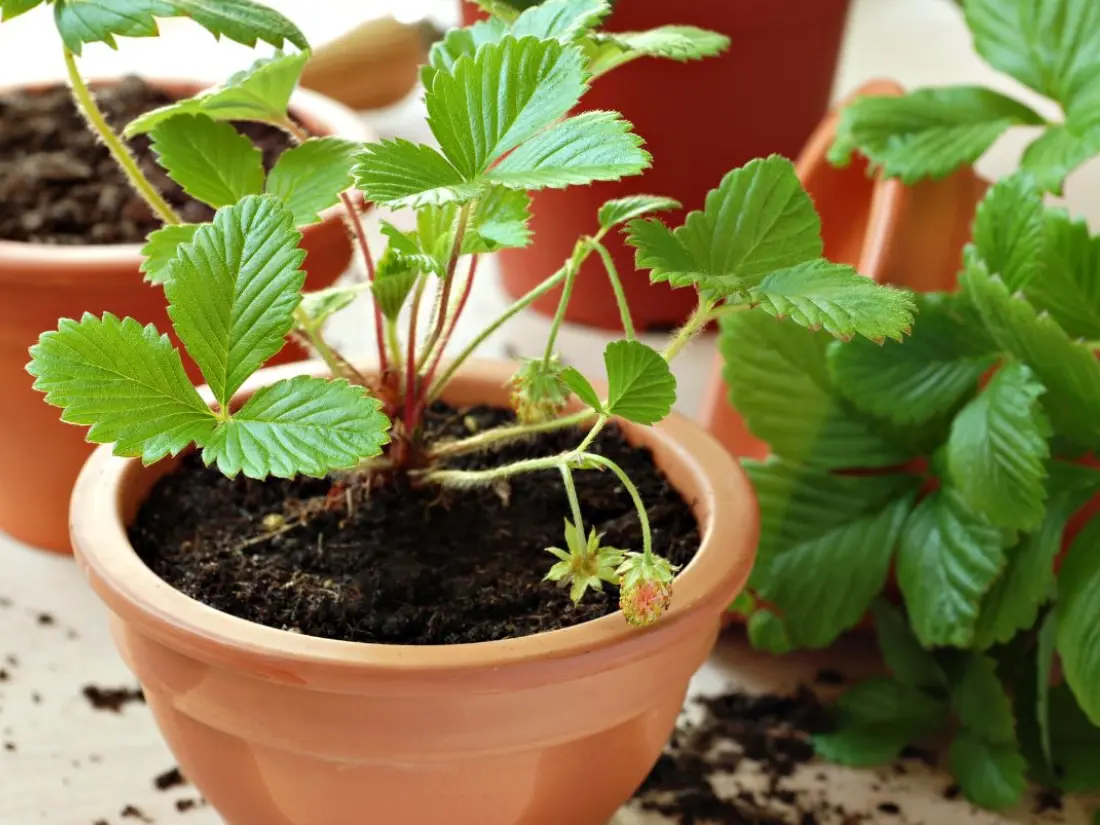
Size Matters: Strawberries have relatively shallow root systems, so they don’t need super deep pots, but they do need room to spread! Choose a container that is at least 6 to 8 inches deep and allows about 10–12 inches of width per plant.
-
Drainage is Key: If there is one thing you take away from this guide, let it be this: strawberries absolutely despise sitting in stagnant water. Ensure your pot has plenty of large drainage holes at the bottom.
-
Material Choices: Terracotta pots, fabric grow bags, and specialized multi-pocket “strawberry planters” are absolute champions. Terracotta allows excess moisture to evaporate, while fabric pots air-prune roots for a healthier, bushier plant.
Best Soil Mix for Pots
Your strawberries prefer a light, fluffy, and nutrient-rich soil that holds moisture without staying soggy.
-
Soil Type: Never use heavy, dense garden soil. It will compact in a pot and suffocate the roots. Instead, opt for a high-quality potting mix and blend in equal parts of perlite or coarse sand to boost drainage. Adding a generous handful of compost or aged manure will give it the rich organic boost it craves.
-
pH Level: Strawberries thrive in slightly acidic soil, ideally with a pH between 5.8 and 6.2.
How to Plant Everbearing Strawberries
Now that you’ve got your pot and soil ready, it’s time to get planting! Timing and proper placement in the soil are crucial here.
Bare-Root vs. Starter Plants
You can buy everbearing strawberries as dormant bare-root crowns in early spring or as leafy potted starter plants from a local nursery. Bare-root plants are super budget-friendly, while starter plants give you a head start on the growing season.
Planting Process
-
Prep the roots: If using bare-root crowns, soak their roots in a bucket of water for 20–30 minutes before planting to wake them up.
-
Fill your container: Add your well-draining soil mix to the pot, leaving about 2 inches of space from the rim. Form a small mound of soil in the center.
-
Position the crown correctly: Spread the roots out over the mound. Crucial Step: Make sure the central crown (where the leaves meet the roots) sits right at the soil surface. Burying the crown causes rot, while leaving it too exposed dries out the plant!
-
Fill and press: Pack more soil around the roots, level it out, and lightly press down to eliminate air pockets.
-
Water well: Give your new plant a thorough soak until water runs out of the drainage holes, then place it in a sunny spot.
Caring for Everbearing Strawberries in Containers
Treat your everbearing strawberry like a sun-loving, water-thirsty fruit engine. Give it maximum sunshine, steady hydration, and a little strategic feeding, and it will reward you with bowls of sweet red treats!
Sunlight and Temperature
Strawberries are absolute sun-worshipers. To produce plenty of sweet blossoms and fully ripen their fruit, they need at least 6 to 8 hours of direct sunlight daily.
Temperature-wise, they perform best when daytime temps are between 60°F and 80°F (15°C to 26°C). Extreme summer heat above 90°F (32°C) can cause production to slow down temporarily, but the plants will bounce back as soon as cooler weather returns.
Watering
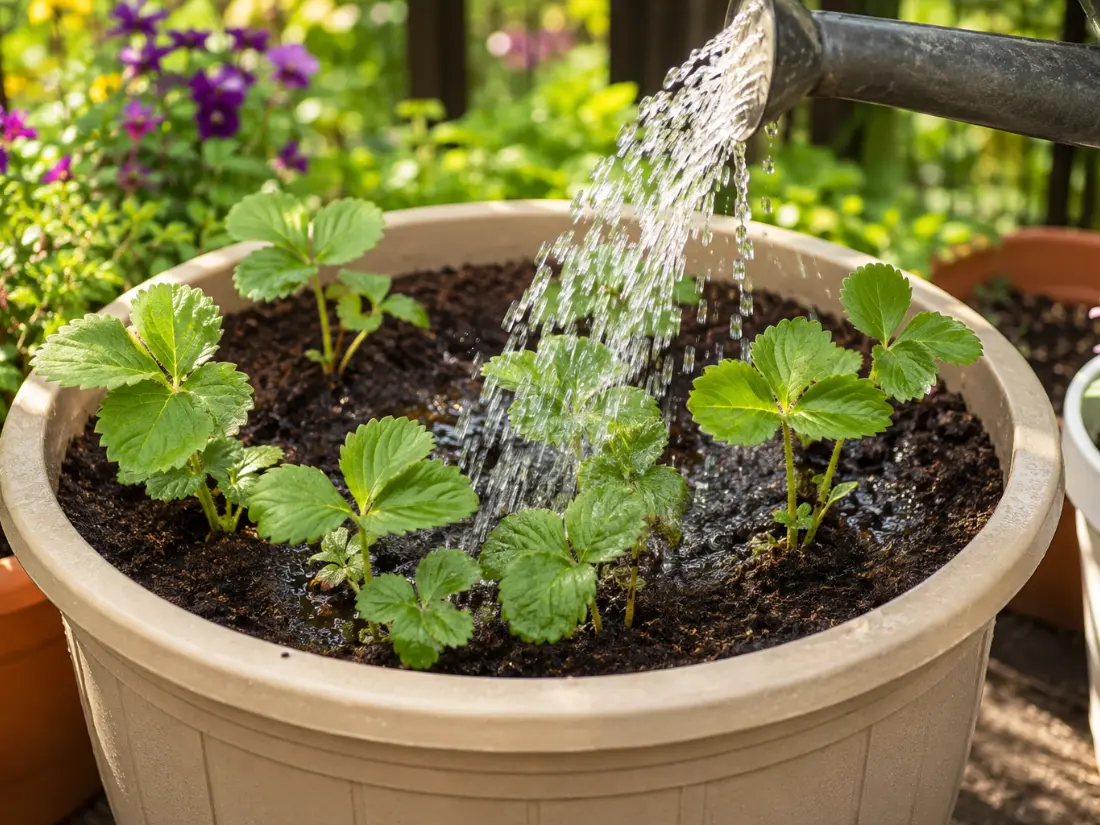
Watering is where most container strawberry growers hit a snag, but the rule is simple once you get the hang of it. Because pots dry out quickly in summer, check the top inch of soil daily.
If the top inch feels dry to the touch, it’s time to water. Apply water directly to the base of the plant and avoid soaking the leaves and fruit, as wet foliage invites fungal diseases!
Feeding
Because potted plants lose nutrients every time you water them, giving your everbearing berries a strategic nutritional boost is essential for continuous fruiting:
-
Spring Growth: Feed every two weeks with a balanced organic liquid fertilizer (like fish emulsion) to build strong stems and lush leaves.
-
Fruiting Season: Switch to a high-potassium fertilizer (like a tomato-specific organic liquid food) once flowers appear. Potassium powers big, juicy, flavorful fruit formation!
Managing Runners and Flowers
Here’s the secret trick to maximizing your harvest with everbearing varieties:
-
Pinch Early Blooms: During the first 3–4 weeks after planting, pinch off any flowers that appear. This forces the plant to direct all its energy into building a massive root system first, resulting in way more berries later!
-
Trim Runners: Everbearing strawberries will send out long stems called “runners” to create baby plants. Trim these off regularly so the parent plant concentrates its energy solely on making berries.
Common Problems and How to Solve Them
Pests and Uninvited Guests
Birds and slugs love ripe strawberries just as much as you do! Protect your container patch by draping a lightweight bird netting over the pot once berries turn red. For slugs, elevate your container off the ground using pot feet or sprinkle organic iron phosphate bait around the base.
Powdery Mildew and Fruit Rot
Gray mold (botrytis) happens when wet fruit sits on damp soil or when airflow is poor. Prevent this by tucking a clean layer of straw mulch around the base of the plant under the berries, and always water the soil directly rather than spraying from above.
Deformed or Small Berries
If your berries are tiny, hard, or weirdly misshapen, the culprit is usually incomplete pollination or inconsistent watering. Give the plant stems a gentle shake on calm days to help drop pollen inside the flowers, and keep soil moisture steady!
Harvesting and Handling Strawberries
When and How to Harvest
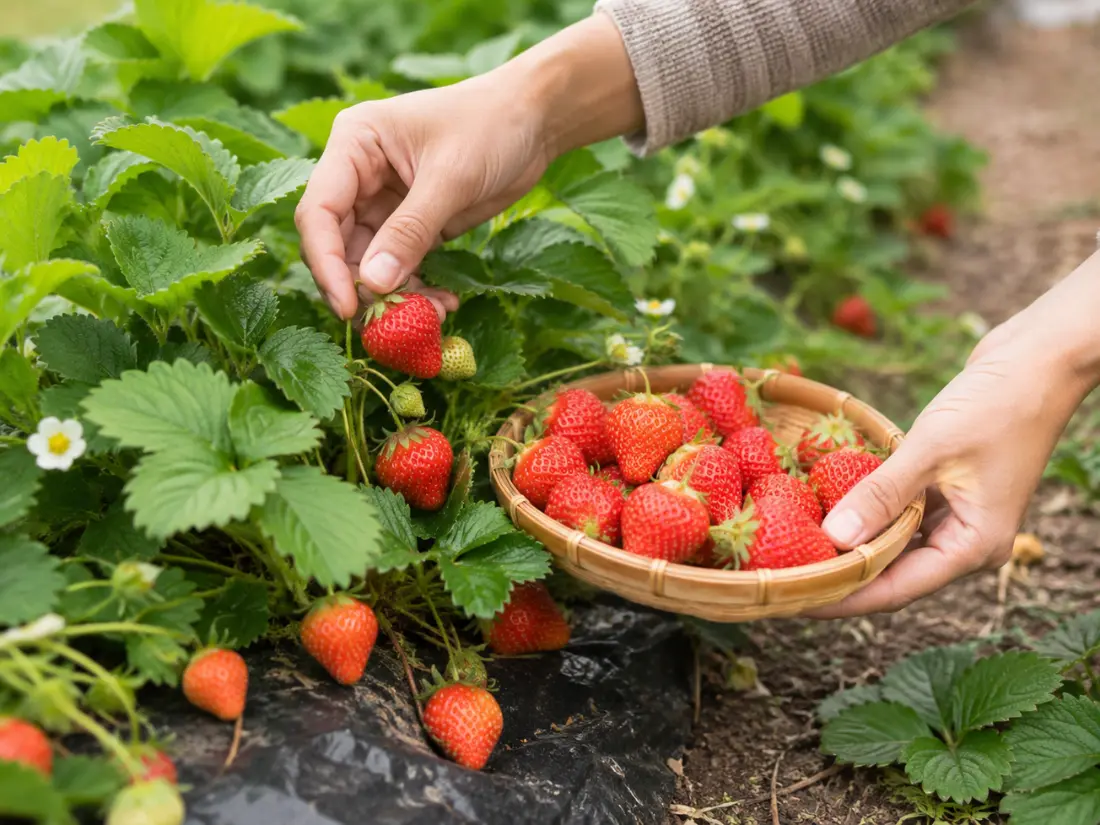
Harvest in the cool morning hours for the best flavor and firmness. Use sharp shears or your fingernails to snip the stem right above the berry cap. Never pull on the fruit directly, as this can easily snap the delicate branches of your potted plant or bruise the berry.
How to Store Your Harvest
-
In the Fridge: Do not wash berries until right before eating! Moisture causes fast spoiling. Store unwashed berries in a paper-towel-lined container in the fridge for up to 3–5 days.
-
In the Freezer: Hull the stems, wash, thoroughly dry, and lay berries flat on a baking sheet to freeze before transferring to a freezer bag. They’re perfect for winter smoothies!
Conclusion
Growing everbearing strawberries in containers is a wildly rewarding, thrilling journey that brings the sweet taste of summer straight to your doorstep. By giving them maximum sunlight, keeping soil moisture consistent, and snipping off early runners, you’ll have a striking, sweet companion that keeps on giving all season long.
So, are you ready to add fresh, homegrown berries to your container garden? Happy gardening, protect your crop from the birds, and may your harvest be sweet and bountiful!
You may like:
- Glencoe Raspberry Care in Summer: The Ultimate Guide to Watering, Fertilizing, and Pruning in June
- Caroline Raspberry Care Guide: Grow Thornless Berries Easily
- What are Wild Huckleberries? Discover the Secrets of This Delicious Berry
Frequently Asked Questions (FAQs)
Do everbearing strawberries come back every year in containers?
Yes! Strawberries are cold-hardy perennials. In late autumn, cut back old foliage, water well, and move the container to an unheated garage, shed, or sheltered spot near the house to protect the roots from severe winter freezes. Bring them back into full sun come spring!
How many strawberry plants can I fit in one pot?
A good rule of thumb is 1 plant per 10–12 inch pot. If you are using a 5-gallon bucket or a large trough, you can easily plant 3 to 4 plants spaced about 8 to 10 inches apart.
Can I grow everbearing strawberries indoors?
You can, but it requires effort. Strawberries need intense light to produce sweet fruit. You will need a high-quality, full-spectrum LED grow light running for 12–14 hours daily and a small paintbrush to cross-pollinate the blossoms manually!
What is the difference between everbearing and June-bearing strawberries?
June-bearing varieties produce one massive crop of large berries over 2 to 3 weeks in early summer. Everbearing varieties produce two to three distinct flushes of medium-sized berries from late spring to autumn, making them far better suited for continuous container harvesting!

Growing Garlic in Containers This Fall: A Complete Guide for Beginners
If you’ve ever wanted to pop fresh, aromatic garlic cloves straight from your own patio [...]
Sep
Growing Camellia Sinensis (Tea Plants) in Containers: A Complete Guide for Beginners
If you’ve ever wanted to sip a steaming, homegrown cup of fresh green, black, or [...]
Aug
6 Best Shrubs to Plant in August You Must Try
Have you ever walked through a nursery late in the summer, admired the vibrant shrubs [...]
Aug
Growing Everbearing Strawberries in Containers: A Complete Guide for Beginners
Want to grow sweet, fresh strawberries but do not have a large garden? Everbearing strawberries [...]
Aug
Growing Egyptian Walking Onions in Containers: A Complete Guide for Beginners
If you’re looking for a hardy, no-fuss perennial onion that keeps on giving year after [...]
Jul
Growing Carolina Reaper Peppers in Pots: A Complete Guide for Beginners
If you’ve ever wanted to add some serious, record-breaking heat to your home cooking, you’ve [...]
May