
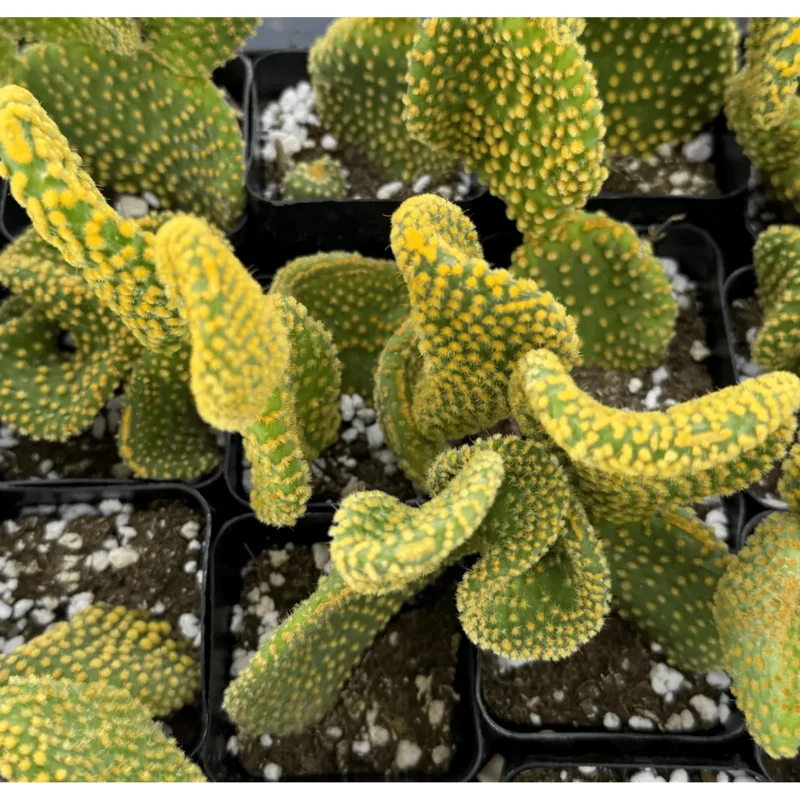
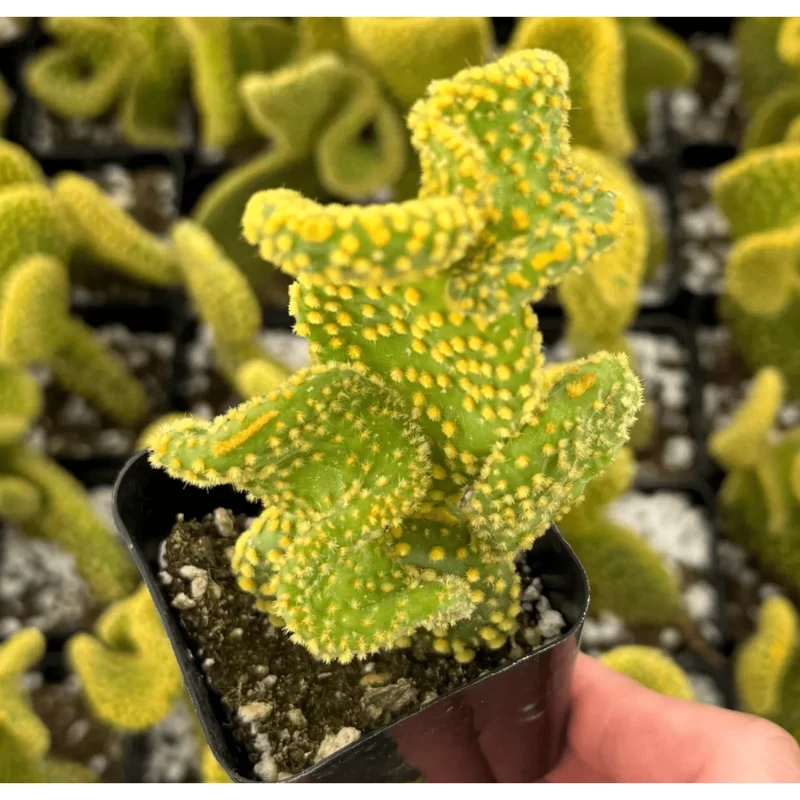
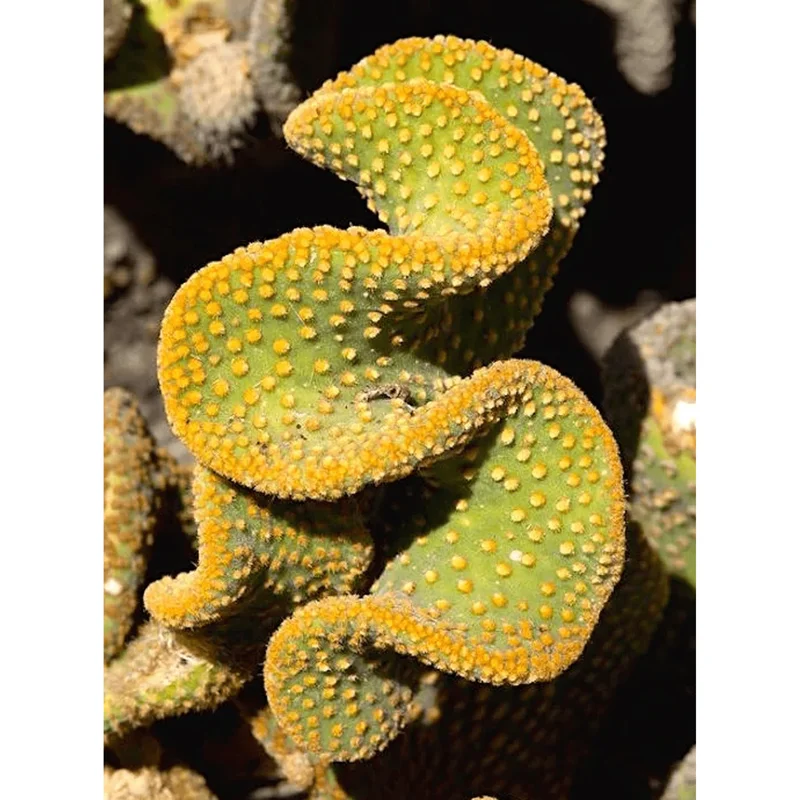
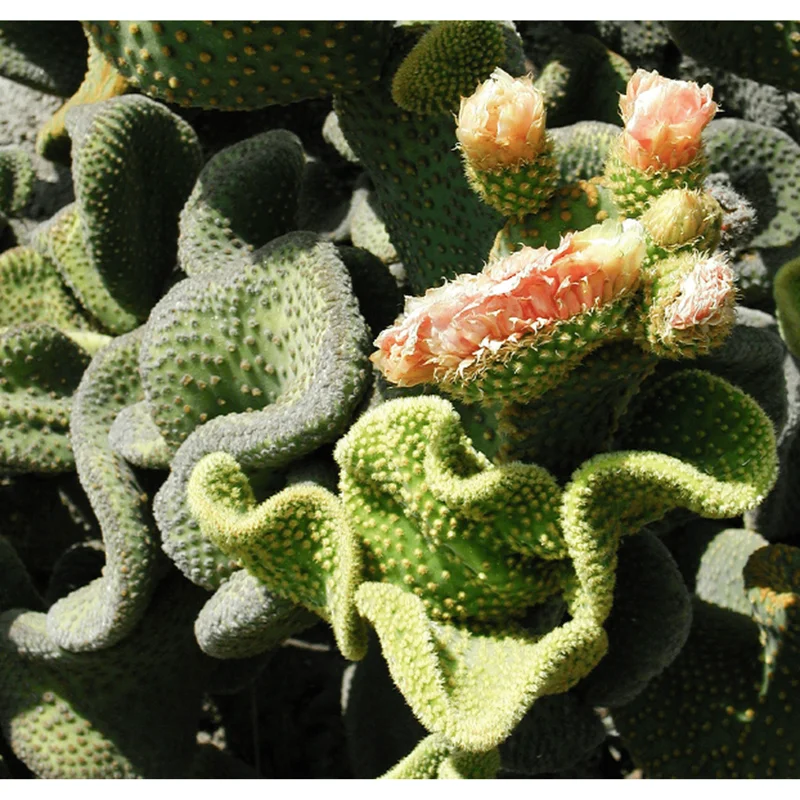
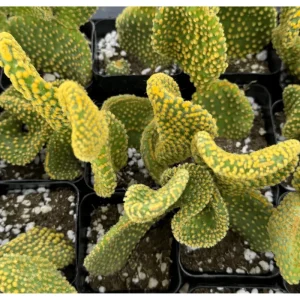
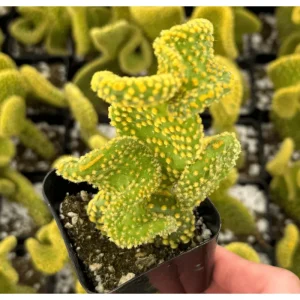
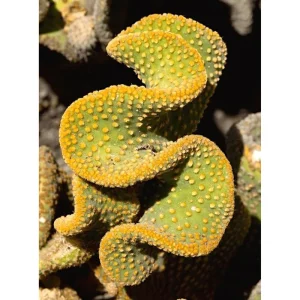
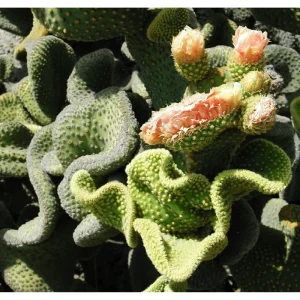
Golden Wavy Cactus Plant Opuntia Microdasys Monstrosus Live Succulent 2.5″ Pot
Original price was: $47.97.$27.97Current price is: $27.97.
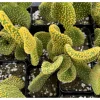
Bring unique charm to your home with the golden wavy cactus. This distinctive Opuntia microdasys monstrosus succulent features wavy, distorted pads and vibrant golden-yellow spines, making it a captivating addition to any plant collection. Perfect for bright indoor spaces, it’s a low-maintenance choice for beginners and experienced plant enthusiasts alike.
Estimated arrival
Oct 22
Oct 27 - Oct 29
Nov 01 - Nov 05

Reasonable Price
We offer reasonable price

Support 24/7
Contact us 24 hrs a day

100% Money Back
You've 30 days to Return

Payment Secure
100% secure payment
Overview
Introduce a touch of the extraordinary to your plant collection with the captivating golden wavy cactus. This remarkable live succulent, scientifically known as Opuntia microdasys monstrosus, is a cultivar celebrated for its unique aesthetic. Unlike typical cacti, it boasts distinctively wavy, distorted pads adorned with eye-catching golden-yellow spines, creating a mesmerizing ‘swirl’ effect. Often referred to by its charming common names, the bunny ear cactus or angel’s wings cactus, this particular ‘monstrosus’ variety showcases an even more irregular and fascinating growth pattern, ensuring no two plants are exactly alike. It’s a popular choice for indoor gardeners seeking a conversation starter that also offers straightforward care.
The allure of the golden wavy cactus lies in its architectural form and vibrant coloration. Each pad develops with an undulating texture, contributing to its ‘wavy’ descriptor, while the bright yellow-green hue further enhances its visual appeal. This succulent is supplied as a healthy live plant, ready to thrive in its new environment. Its robust nature and striking appearance make it an ideal specimen for windowsills, desks, or any bright spot where its unique character can be fully appreciated.
Key Benefits
The golden wavy cactus offers a multitude of benefits, making it an excellent choice for both novice and seasoned plant enthusiasts. Its unique characteristics contribute to a vibrant and low-stress living environment.
- Unique Ornamental Appeal: The distorted, wavy pads and golden spines of the golden wavy cactus create a truly distinctive and artistic display. It serves as a natural focal point, adding texture and a pop of color to any room.
- Low Maintenance: This succulent is renowned for its resilience and minimal care requirements. It thrives on neglect, making it perfect for busy individuals or those new to plant ownership.
- Drought Tolerant: As a cactus, it has evolved to store water efficiently, requiring infrequent watering. This makes it an ideal plant for those who occasionally forget to water or live in drier climates.
- Air Purification: Like many houseplants, the Opuntia microdasys monstrosus contributes to better indoor air quality by absorbing toxins and releasing oxygen, especially at night.
- Compact Size: Its moderate growth habit makes it suitable for smaller spaces, such as apartment living, office desks, or clustered succulent arrangements.
- Conversation Starter: The unusual ‘swirl’ and ‘wavy’ appearance of this particular bunny ear cactus cultivar is sure to spark interest and admiration from guests.
- Easy Propagation: With proper care, pads can be easily rooted to create new plants, allowing you to expand your collection or share with friends.
Plant Care & Growing Tips
Caring for your golden wavy cactus is relatively simple, provided you understand its basic needs as a succulent. The key to its health and vibrant appearance lies in replicating its natural desert-like conditions. For successful succulent plant care, prioritize proper light, watering, and soil.
Sunlight Requirements: This Opuntia microdasys monstrosus thrives in bright light. It prefers at least 6 hours of direct sunlight per day. Place it in a south-facing window indoors, or a very bright east or west-facing window. If outdoor conditions allow, full sun is ideal, but introduce it gradually to prevent sunburn. Insufficient light can lead to etiolation, where the plant stretches and becomes leggy.
Watering Schedule: Overwatering is the most common cause of problems for the golden wavy cactus. Allow the soil to dry out completely between waterings. In warmer months (spring and summer), you might water every 2-4 weeks, depending on humidity and temperature. During cooler, dormant periods (fall and winter), reduce watering significantly to once a month or even less. Always check the soil moisture with your finger before watering. When you do water, do so thoroughly until water drains from the bottom of the pot.
Soil Type and Drainage: Excellent drainage is crucial. Use a specialized cactus or succulent potting mix, or create your own by mixing regular potting soil with perlite, pumice, or coarse sand at a 1:1 ratio. The pot must have drainage holes to prevent waterlogging and root rot. Good drainage is vital for the health of any bunny ear cactus.
Temperature and USDA Hardiness Zone: The golden wavy cactus prefers warm temperatures, ideally between 65-85°F (18-29°C). It is not frost-tolerant and should be protected from temperatures below 40°F (4°C). If grown outdoors in colder climates, it must be brought inside before the first frost. This plant is typically suited for USDA zones 9-11 for outdoor cultivation.
Fertilization: Fertilize sparingly, if at all. During the growing season (spring and summer), you can apply a diluted, balanced liquid fertilizer formulated for cacti and succulents, typically once every 2-4 weeks. Do not fertilize during the dormant winter months. Over-fertilization can harm the plant.
Common Problems: Watch out for mealybugs, which can be treated with insecticidal soap or rubbing alcohol. Root rot is a common issue caused by overwatering, identifiable by mushy stems. Ensure good drainage and allow soil to dry out between waterings to prevent this. Minimal care is needed for this robust angel’s wings cactus.
Size & Details
This golden wavy cactus, an Opuntia microdasys monstrosus, is supplied as a live plant in a 2.5-inch nursery pot. At the time of shipping, the plant typically stands approximately 2-4 inches tall from the soil line, with a spread of 2-3 inches, consisting of several pads. As a relatively slow-growing succulent, it maintains a compact size indoors, making it an excellent choice for small spaces or dish gardens. With optimal succulent plant care, it can eventually reach heights of up to 1-2 feet and a similar spread over many years, forming an attractive, mounding specimen. Its distinctive wavy pads will continue to develop their golden hue and unique texture as the plant matures.
The plant is carefully packaged to ensure its safe arrival. It ships in its nursery pot with well-draining soil, minimizing transplant shock upon arrival. While this variety does not produce showy flowers, its fascinating architectural form and golden spines provide year-round visual interest. Expect steady, albeit slow, growth under suitable conditions, adding a unique, living sculpture to your indoor garden. This particular cultivar of bunny ear cactus will develop more prominent ‘wavy’ characteristics over time.
Frequently Asked Questions
- Q: How big does this golden wavy cactus get? A: This succulent is relatively slow-growing. In optimal indoor conditions, it can eventually reach heights of 1-2 feet and a similar spread, though it will take several years to achieve this size. It’s generally a compact plant.
- Q: What size pot does it come in? A: The Opuntia microdasys monstrosus live plant is shipped in a 2.5-inch nursery pot, providing a good starting point for its growth. We recommend repotting into a slightly larger pot with good drainage as it grows.
- Q: Is this an indoor or outdoor plant? A: The golden wavy cactus can be grown both indoors and outdoors. Indoors, it needs a very bright, sunny location. Outdoors, it thrives in full sun in warm climates, typically USDA zones 9-11. It must be protected from frost.
- Q: How much sunlight does it need? A: This plant requires abundant sunlight. Aim for at least 6 hours of direct sun daily. A south-facing window is ideal indoors, or a bright east/west-facing window. Insufficient light can cause the plant to stretch out.
- Q: Is this plant easy to care for? Is it good for beginners? A: Yes, the golden wavy cactus is considered very easy to care for, making it an excellent choice for beginners. Its drought tolerance and minimal needs simplify succulent plant care significantly.
- Q: What condition will it arrive in? A: Your angel’s wings cactus will arrive as a healthy, live plant in its nursery pot with soil. It will be carefully packaged to ensure it withstands transit and arrives in excellent condition, ready for its new home.
- Q: How often should I water my bunny ear cactus? A: Water sparingly. Allow the soil to dry out completely between waterings. This could be every 2-4 weeks during the growing season and even less frequently (monthly or less) during winter dormancy. Always check the soil first.
- Q: What kind of soil is best for the Opuntia microdasys monstrosus? A: A well-draining soil mix is crucial. Use a specialized cactus and succulent potting mix, or amend regular potting soil with perlite, pumice, or coarse sand to improve drainage and prevent root rot.
- Q: Does this cactus have actual thorns or just fuzzy glochids? A: This golden wavy cactus, like other Opuntia microdasys varieties, has glochids (tiny, hair-like barbed spines) rather than traditional thorns. While small, they can be irritating if they get into the skin, so handle with care using gloves or tongs.
- Q: Will it survive winter in my zone? A: If you are in USDA zones 9-11, it can likely survive outdoors year-round. In colder zones, it must be brought indoors before temperatures drop below 40°F (4°C) to protect it from frost damage.
Be the first to review “Golden Wavy Cactus Plant Opuntia Microdasys Monstrosus Live Succulent 2.5″ Pot”
-
USDA Hardiness Zone
USDA zones 9–11 -
Soil Type
Well-draining cactus or succulent mix -
Sunlight Exposure
Full sun to bright indirect light -
Expected Planting Period
Year-round indoors
People Also Viewd


Sold 134 products
Original price was: $3,536.00.$23.99Current price is: $23.99.

Sold 132 products
Original price was: $27.00.$24.00Current price is: $24.00.

Sold 132 products
Original price was: $89.99.$64.99Current price is: $64.99.

Sold 125 products
Original price was: $86.99.$66.99Current price is: $66.99.

Flower Bulbs
3 Cranesbill Wild Geranium Organic Maculatums Bare Roots | Wildflower for Outdoor Garden
Sold 116 products
Original price was: $21.99.$9.99Current price is: $9.99.

Sold 114 products
Original price was: $28.99.$17.99Current price is: $17.99.

Sold 110 products
Original price was: $63.99.$28.99Current price is: $28.99.
Sold 108 products
Original price was: $28.99.$17.99Current price is: $17.99.RELATED posts
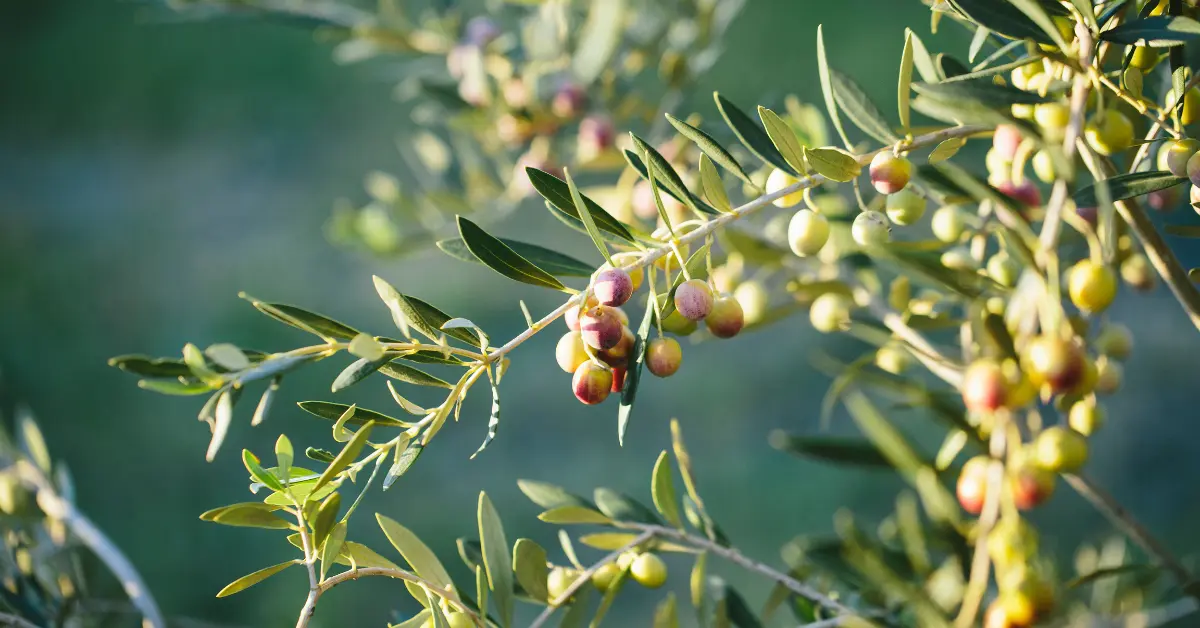
How to Grow Arbequina Olive Trees: The Ultimate Guide to Your Own Olive Grove
Arbequina Olive Tree (Olea europaea ‘Arbequina’) – the ultimate Mediterranean plant that brings a touch [...]
Oct
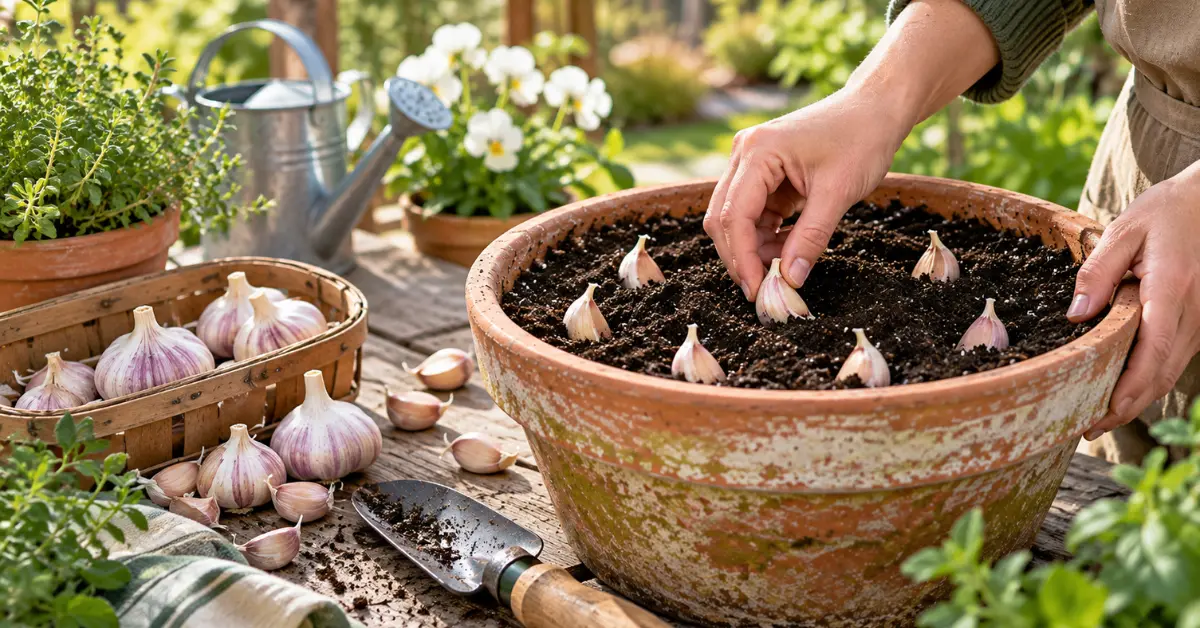
Growing Garlic in Containers This Fall: A Complete Guide for Beginners
If you’ve ever wanted to pop fresh, aromatic garlic cloves straight from your own patio [...]
Sep
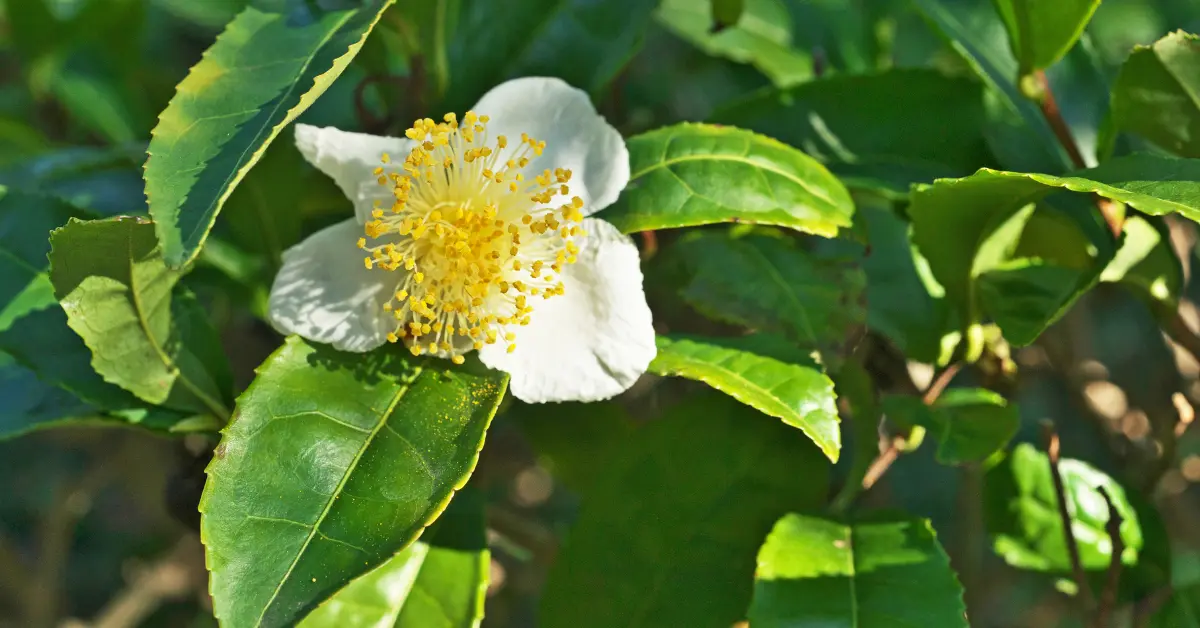
Growing Camellia Sinensis (Tea Plants) in Containers: A Complete Guide for Beginners
If you’ve ever wanted to sip a steaming, homegrown cup of fresh green, black, or [...]
Aug
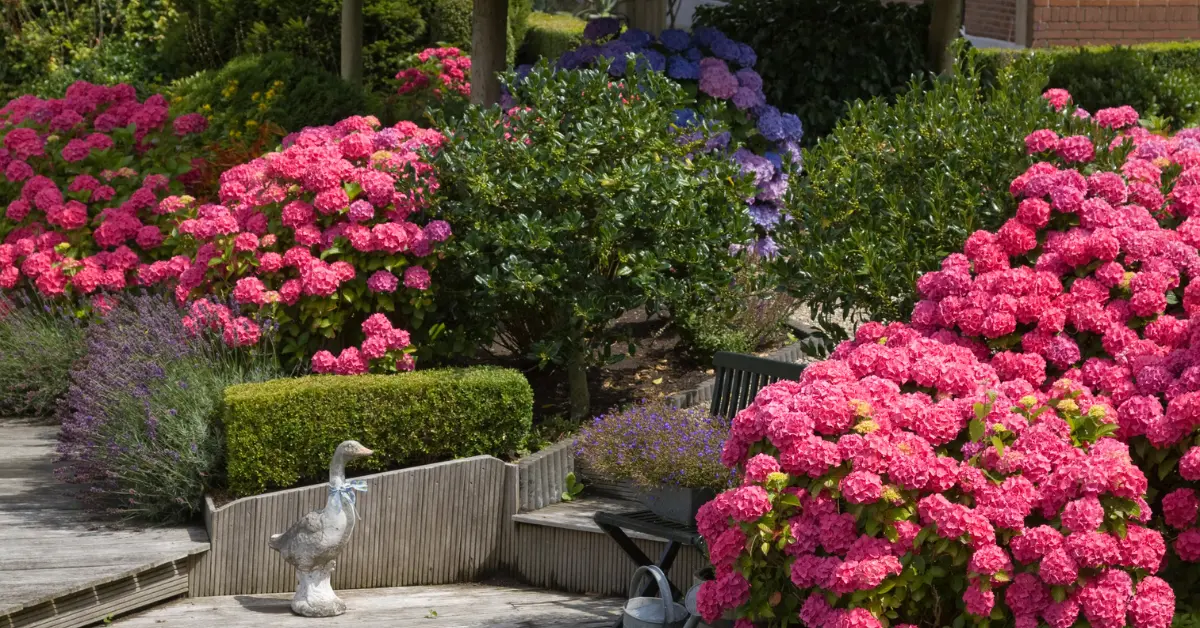
6 Best Shrubs to Plant in August You Must Try
Have you ever walked through a nursery late in the summer, admired the vibrant shrubs [...]
Aug
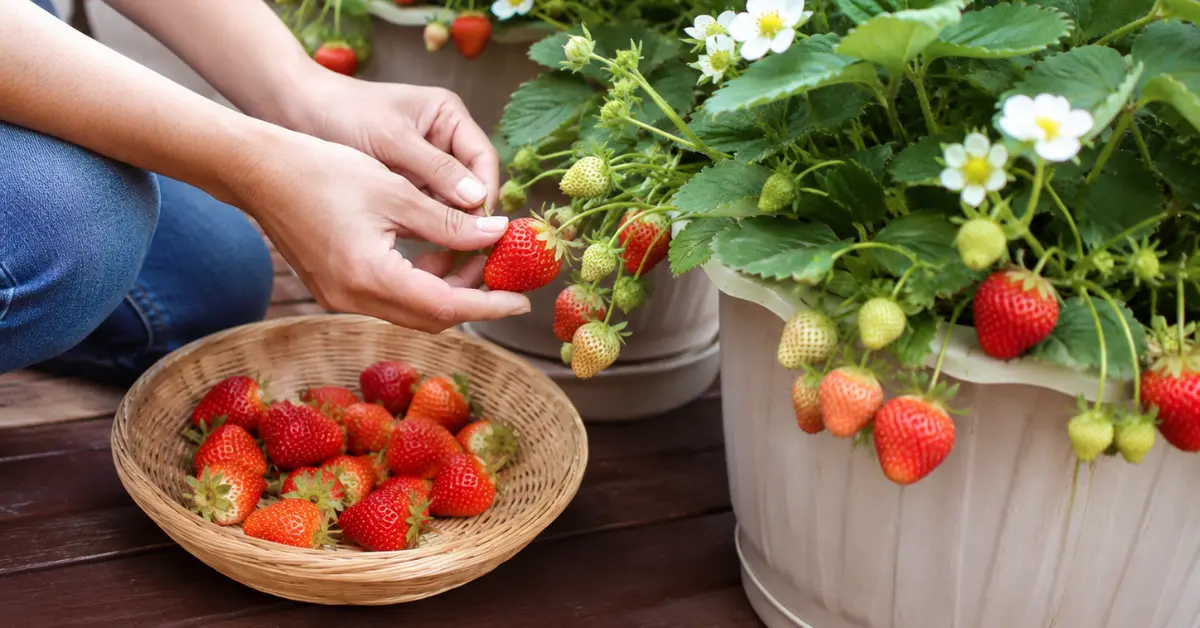
Growing Everbearing Strawberries in Containers: A Complete Guide for Beginners
Want to grow sweet, fresh strawberries but do not have a large garden? Everbearing strawberries [...]
Aug
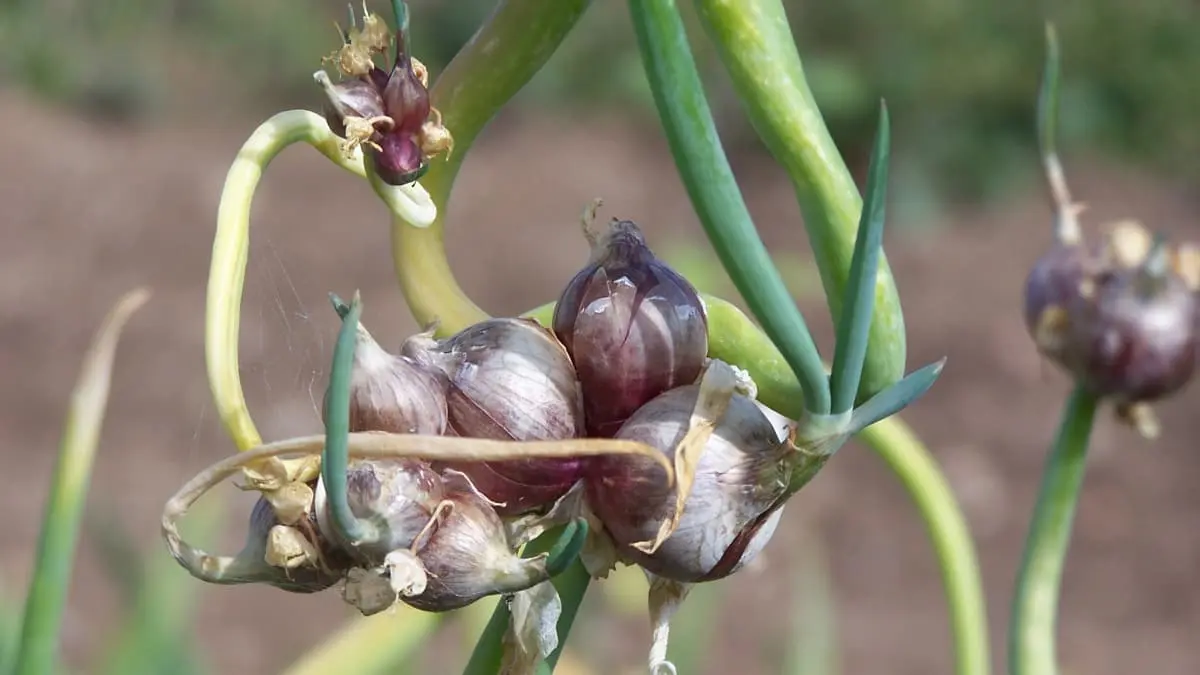
Growing Egyptian Walking Onions in Containers: A Complete Guide for Beginners
If you’re looking for a hardy, no-fuss perennial onion that keeps on giving year after [...]
Jul
Growing Carolina Reaper Peppers in Pots: A Complete Guide for Beginners
If you’ve ever wanted to add some serious, record-breaking heat to your home cooking, you’ve [...]
May
Growing Curry Leaf Plant in Pots: A Complete Guide for Beginners
If you’re a fan of authentic South Asian cuisine, you already know that nothing compares [...]
May
Reviews
There are no reviews yet.