
Moringa Oleifera Live Plants – Drumstick Tree Seedlings, 2-Pack, 12-18 Inches Tall, Easy Care Tropical Tree for Outdoor Planting
Original price was: $43.98.$23.98Current price is: $23.98.
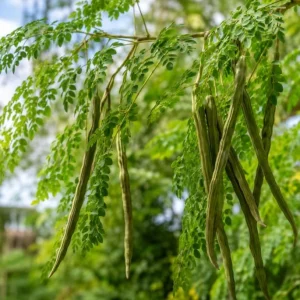
Cultivate your own superfood with these Moringa Oleifera live plants. You receive two healthy 12-18 inch drumstick tree seedlings, ready for outdoor planting in USDA Zones 9-11. These easy-care tropical trees are perfect for patios, backyards, and edible gardens, offering nutritional benefits and rapid growth.
Estimated arrival
Oct 22
Oct 27 - Oct 29
Nov 01 - Nov 05

Reasonable Price
We offer reasonable price

Support 24/7
Contact us 24 hrs a day

100% Money Back
You've 30 days to Return

Payment Secure
100% secure payment
Overview
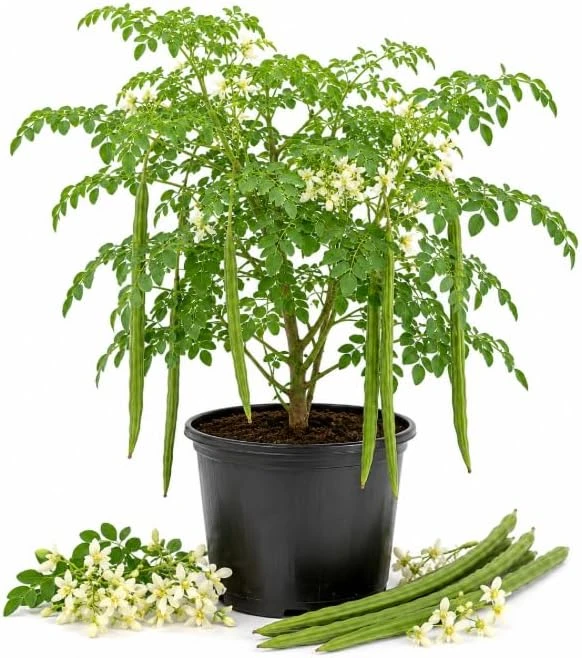
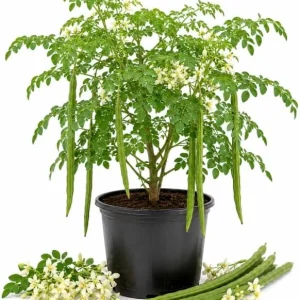
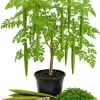
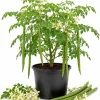
Discover the incredible benefits of growing your own Moringa Oleifera live plants. This offering includes two vibrant Moringa Oleifera live plants, also widely known as the Drumstick Tree, Miracle Tree, or Ben Oil Tree. Each seedling stands impressively between 12 to 18 inches tall, arriving in pots and ready for transplanting into your garden or a larger container. Moringa oleifera is celebrated globally for its exceptional nutritional profile and rapid growth, making it a valuable addition to any edible landscape or permaculture project. Originating from India, this tropical deciduous tree thrives in warm climates, producing edible leaves, pods, and flowers that are packed with vitamins, minerals, and antioxidants. These young trees are robust and designed for easy care, making them suitable for both experienced gardeners and those new to cultivating edible tropical plants. Transform your outdoor space into a source of fresh, homegrown superfood with these remarkable plants.
Key Benefits
Adding Moringa Oleifera live plants to your garden provides a wealth of advantages, from nutritional value to environmental benefits. These versatile trees are not only beautiful but also highly functional. Cultivating them allows you to enjoy fresh, organic moringa leaves and pods right from your backyard, ensuring you have a steady supply of this powerhouse plant.
- Nutrient-Dense Superfood: Moringa leaves are renowned for being exceptionally rich in vitamins (A, C, E, K, B), minerals (calcium, potassium, iron, magnesium), and protein. Incorporating them into your diet can boost overall health and well-being.
- Rapid Growth & High Yield: These drumstick tree seedlings are fast-growing, quickly providing an abundant supply of edible leaves and pods. With proper care, you can enjoy multiple harvests throughout the growing season, making it a very productive plant.
- Easy to Grow: Moringa trees are surprisingly low-maintenance once established. They are drought-tolerant and adaptable to various soil conditions, making them an ideal choice for gardeners seeking an easy-care tropical tree.
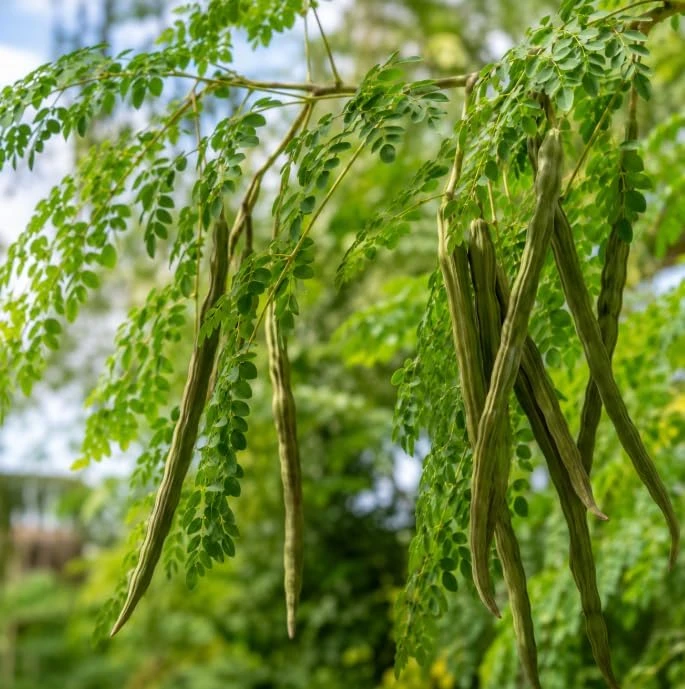
- Versatile Culinary Uses: The leaves can be used fresh in salads, smoothies, and stir-fries, or dried and powdered for use as a nutritional supplement. The young pods (drumsticks) are also edible and commonly used in curries and stews.
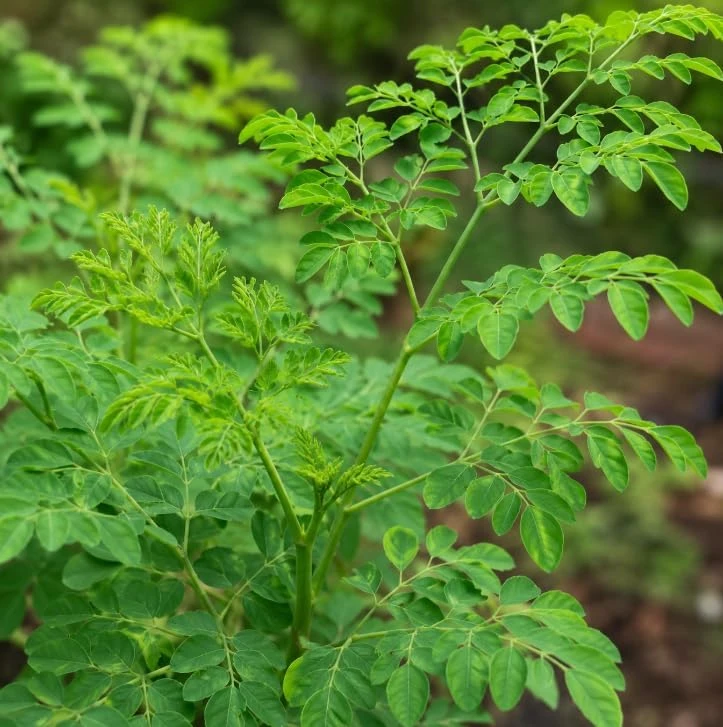
- Attractive Tropical Foliage: Beyond its edible qualities, the Moringa tree features delicate, feathery foliage that adds a beautiful tropical aesthetic to your garden, patio, or backyard.
- Supports Sustainable Living: Growing your own Moringa Oleifera live plants contributes to a more sustainable lifestyle by reducing reliance on store-bought produce and promoting self-sufficiency in food production.
- Adaptable to Containers: While ideal for outdoor planting in suitable zones, these trees can also thrive in large containers, allowing them to be moved indoors during colder months in non-tropical climates.
Plant Care & Growing Tips
Caring for your Moringa Oleifera live plants is straightforward, ensuring you get the best yield from these beneficial trees. These tropical plants thrive in specific conditions that mimic their native environment. To successfully grow moringa tree, understanding its basic needs for light, water, and soil is crucial.
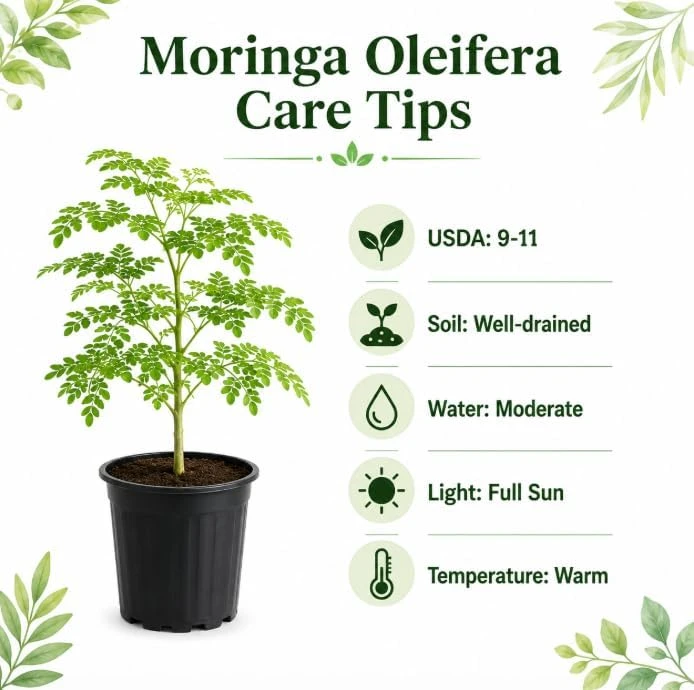
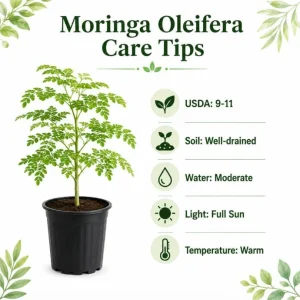
Sunlight: Moringa trees are sun-loving plants and require at least 6-8 hours of direct sunlight daily to flourish. Plant them in a location that receives full sun exposure throughout the day. If growing in containers, ensure they are placed in the sunniest spot on your patio or balcony. Insufficient light can lead to leggy growth and reduced leaf production.
Watering: While drought-tolerant once established, young drumstick tree seedlings need regular watering to develop a strong root system. Water thoroughly when the top inch or two of soil feels dry to the touch. Avoid overwatering, as moringa is susceptible to root rot in waterlogged conditions. During dry spells, increase watering frequency. As the tree matures, it will tolerate drier periods, but consistent moisture will promote better growth and leaf production.
Soil: Moringa thrives in well-draining sandy or loamy soil. It tolerates a range of soil types but absolutely requires good drainage. If your soil is heavy clay, amend it with sand and organic matter to improve drainage. A slightly acidic to neutral pH (6.0-7.0) is ideal. For container planting, use a high-quality potting mix blended with perlite or sand to ensure excellent drainage. Proper soil conditions are key to healthy moringa plant care.
Temperature & USDA Zones: These are tropical trees that prefer warm temperatures. Ideal temperatures range between 70°F and 95°F (21°C – 35°C). They are hardy in USDA Zones 9 to 11, where they can be grown outdoors year-round. In colder climates, they can be grown as annuals or overwintered indoors as container plants, though they may go dormant or drop leaves in cooler conditions. Protect from frost, as young plants are particularly sensitive.
Fertilization: Moringa trees are not heavy feeders but can benefit from occasional fertilization, especially when young. Use a balanced organic fertilizer or compost every 2-4 weeks during the active growing season (spring and summer). Avoid high-nitrogen fertilizers if you want to promote flowering and pod production, as too much nitrogen can encourage only leafy growth. For best results, use a compost tea or a balanced liquid feed.
Pruning: Regular pruning is beneficial for moringa. It encourages bushier growth, makes harvesting easier, and prevents the tree from becoming too tall and spindly. You can prune your Moringa Oleifera live plants back by about one-third of their height once they reach 3-4 feet tall, and continue to prune regularly to maintain your desired size and shape. Pruning also helps stimulate new leaf production.
Size & Details
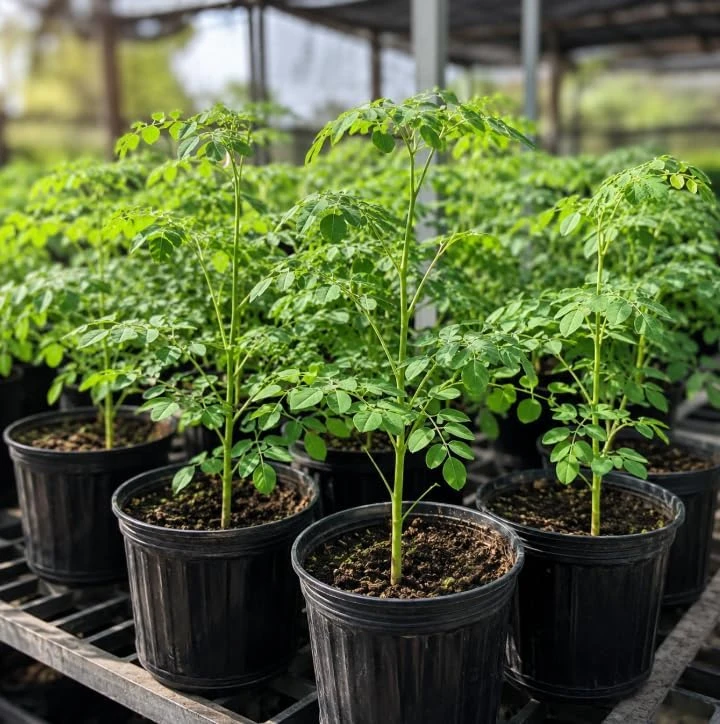
This offering includes two robust Moringa Oleifera live plants, each standing between 12 to 18 inches tall from the base of the pot to the tip of the foliage. They arrive carefully packed in their nursery pots, ensuring minimal transplant shock and immediate readiness for planting. These drumstick tree seedlings are at an ideal stage for establishing quickly in your garden or a larger container. Moringa trees are known for their fast growth rate; with optimal conditions, they can grow several feet in a single season. Expect these young trees to develop into mature specimens that can reach heights of 10-20 feet if left unpruned, though they can be maintained at a smaller, more manageable size through regular pruning. They are shipped as healthy, actively growing plants, ready to thrive in your outdoor space, providing you with a continuous supply of this beneficial tropical edible tree.
Frequently Asked Questions
- Q: How big do these Moringa Oleifera live plants get? A: These seedlings are 12-18 inches tall upon arrival. If planted in the ground and left unpruned, a mature Moringa tree can reach 10-20 feet in height. However, they can be easily maintained at a smaller, more bush-like size through regular pruning, which also encourages more leaf production.
- Q: Is this an indoor or outdoor plant? A: Moringa Oleifera live plants are tropical trees best suited for outdoor planting in USDA Zones 9-11. In colder climates, they can be grown outdoors during the warm season and brought indoors as container plants during winter, or grown as annuals.
- Q: How much sunlight does it need? A: Moringa trees require full sun, meaning at least 6-8 hours of direct sunlight per day. They will not thrive in shady conditions, which can lead to weak growth and fewer leaves.
- Q: Is this plant easy to care for? A: Yes, Moringa Oleifera live plants are considered relatively easy to care for, especially once established. They are drought-tolerant and adaptable, making them suitable for beginner gardeners interested in growing a tropical edible tree.
- Q: What condition will the plants arrive in? A: Your drumstick tree seedlings will arrive as healthy, actively growing live plants in their nursery pots. They are carefully packaged to ensure they reach you in excellent condition, ready for transplanting.
- Q: Can I use moringa leaves in cooking? A: Absolutely! Moringa leaves are highly nutritious and can be used fresh in salads, smoothies, soups, and stir-fries. They can also be dried and powdered to add to various dishes or used as a nutritional supplement.
- Q: What’s the minimum temperature these plants can tolerate? A: Moringa Oleifera live plants are sensitive to cold. They prefer temperatures above 70°F (21°C) and can be damaged by temperatures below 50°F (10°C). They will not survive frost, so protection is essential in cooler climates.
- Q: When is the best time to plant these Moringa Oleifera live plants? A: The best time to plant is after all danger of frost has passed and when temperatures are consistently warm, typically in late spring or early summer. This allows the young plants ample time to establish themselves before any potential cooler weather.
- Q: What type of soil is best for growing moringa tree? A: Moringa thrives in well-draining sandy or loamy soil. Good drainage is crucial to prevent root rot. If your soil is heavy, amend it with sand and organic matter.
- Q: Is this plant good for beginners? A: Yes, due to its resilience and relatively simple care requirements, Moringa Oleifera live plants are an excellent choice for beginners looking to grow an edible and beneficial tropical tree. Following basic care guidelines will ensure success.
Be the first to review “Moringa Oleifera Live Plants – Drumstick Tree Seedlings, 2-Pack, 12-18 Inches Tall, Easy Care Tropical Tree for Outdoor Planting”
-
USDA Hardiness Zone
USDA Zones 9 to 11 -
Soil Type
Well-draining sandy or loamy soil -
Sunlight Exposure
Full sun (at least 6-8 hours daily) -
Expected Planting Period
Spring to early summer (after last frost)
People Also Viewd


Sold 134 products
Original price was: $3,536.00.$23.99Current price is: $23.99.

Sold 132 products
Original price was: $27.00.$24.00Current price is: $24.00.

Sold 132 products
Original price was: $89.99.$64.99Current price is: $64.99.

Sold 125 products
Original price was: $86.99.$66.99Current price is: $66.99.

Flower Bulbs
3 Cranesbill Wild Geranium Organic Maculatums Bare Roots | Wildflower for Outdoor Garden
Sold 116 products
Original price was: $21.99.$9.99Current price is: $9.99.

Sold 114 products
Original price was: $28.99.$17.99Current price is: $17.99.

Sold 110 products
Original price was: $63.99.$28.99Current price is: $28.99.
Sold 108 products
Original price was: $28.99.$17.99Current price is: $17.99.RELATED posts
How to Grow Arbequina Olive Trees: The Ultimate Guide to Your Own Olive Grove
Arbequina Olive Tree (Olea europaea ‘Arbequina’) – the ultimate Mediterranean plant that brings a touch [...]
Oct
Growing Garlic in Containers This Fall: A Complete Guide for Beginners
If you’ve ever wanted to pop fresh, aromatic garlic cloves straight from your own patio [...]
Sep
Growing Camellia Sinensis (Tea Plants) in Containers: A Complete Guide for Beginners
If you’ve ever wanted to sip a steaming, homegrown cup of fresh green, black, or [...]
Aug
6 Best Shrubs to Plant in August You Must Try
Have you ever walked through a nursery late in the summer, admired the vibrant shrubs [...]
Aug
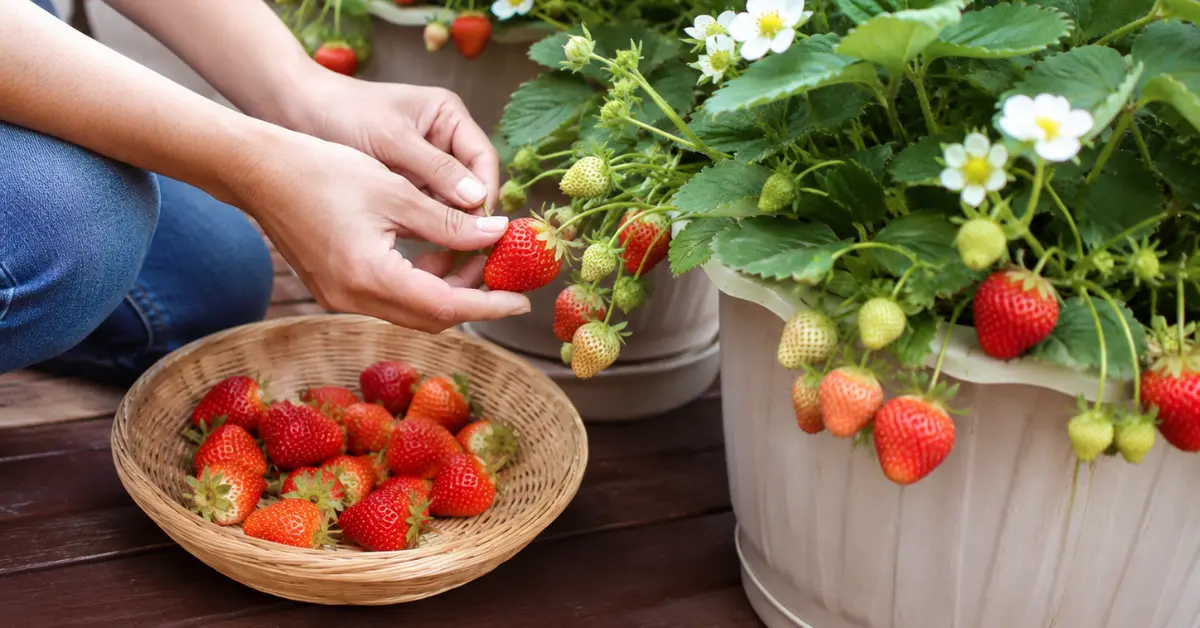
Growing Everbearing Strawberries in Containers: A Complete Guide for Beginners
Want to grow sweet, fresh strawberries but do not have a large garden? Everbearing strawberries [...]
Aug
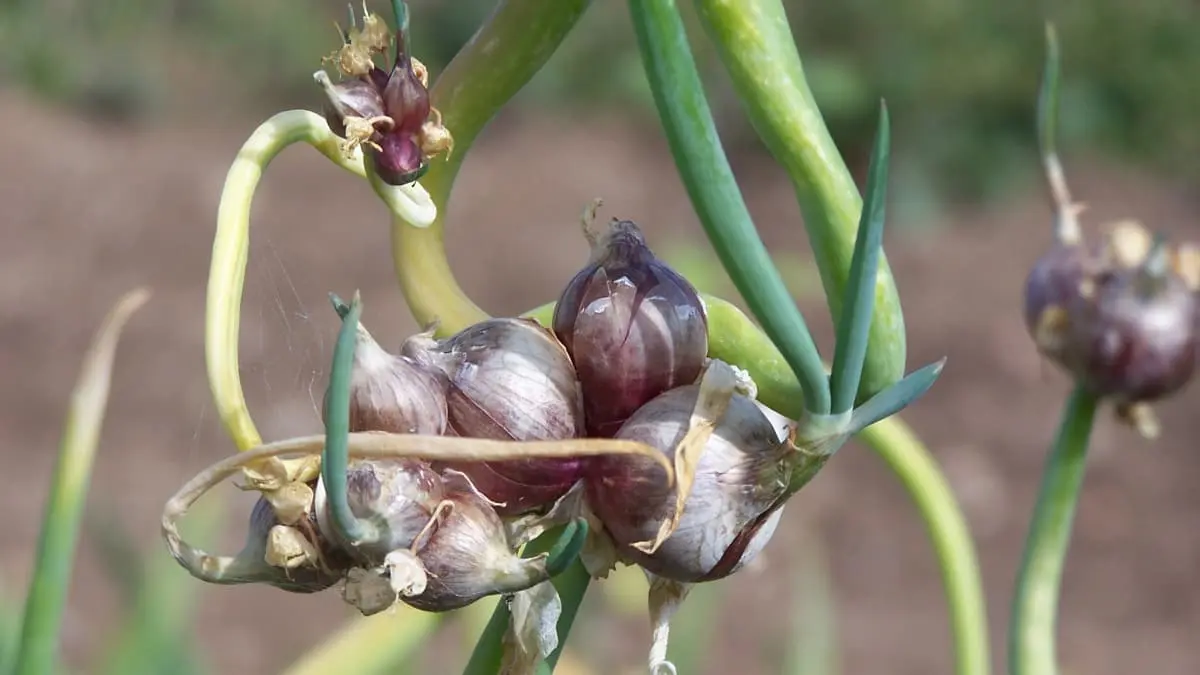
Growing Egyptian Walking Onions in Containers: A Complete Guide for Beginners
If you’re looking for a hardy, no-fuss perennial onion that keeps on giving year after [...]
Jul
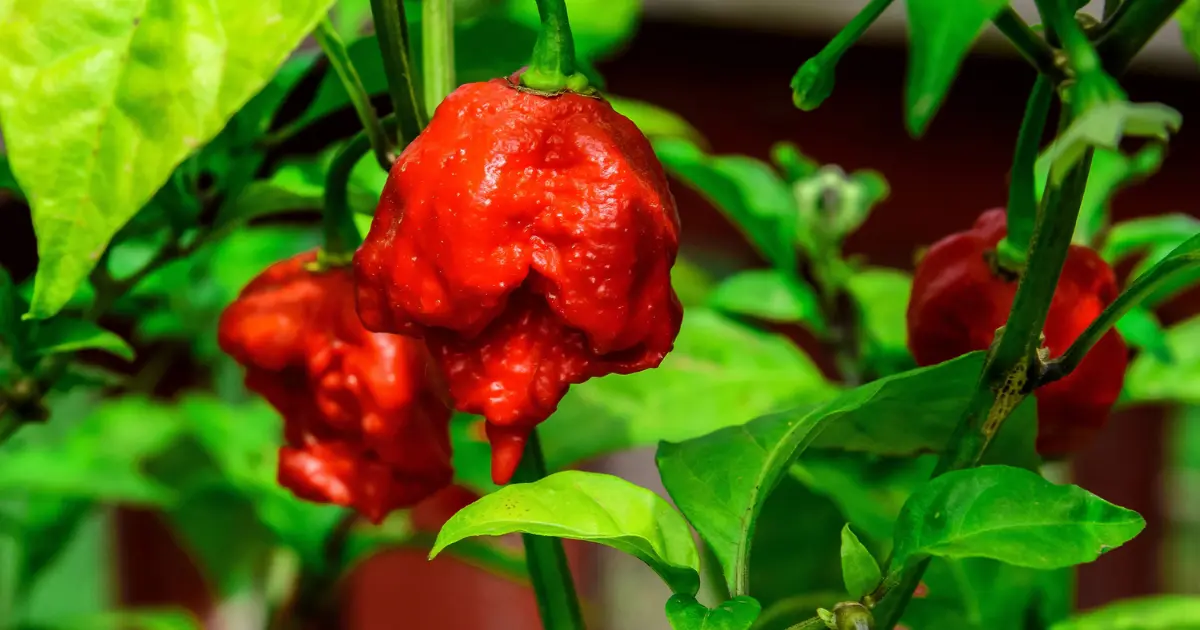
Growing Carolina Reaper Peppers in Pots: A Complete Guide for Beginners
If you’ve ever wanted to add some serious, record-breaking heat to your home cooking, you’ve [...]
May
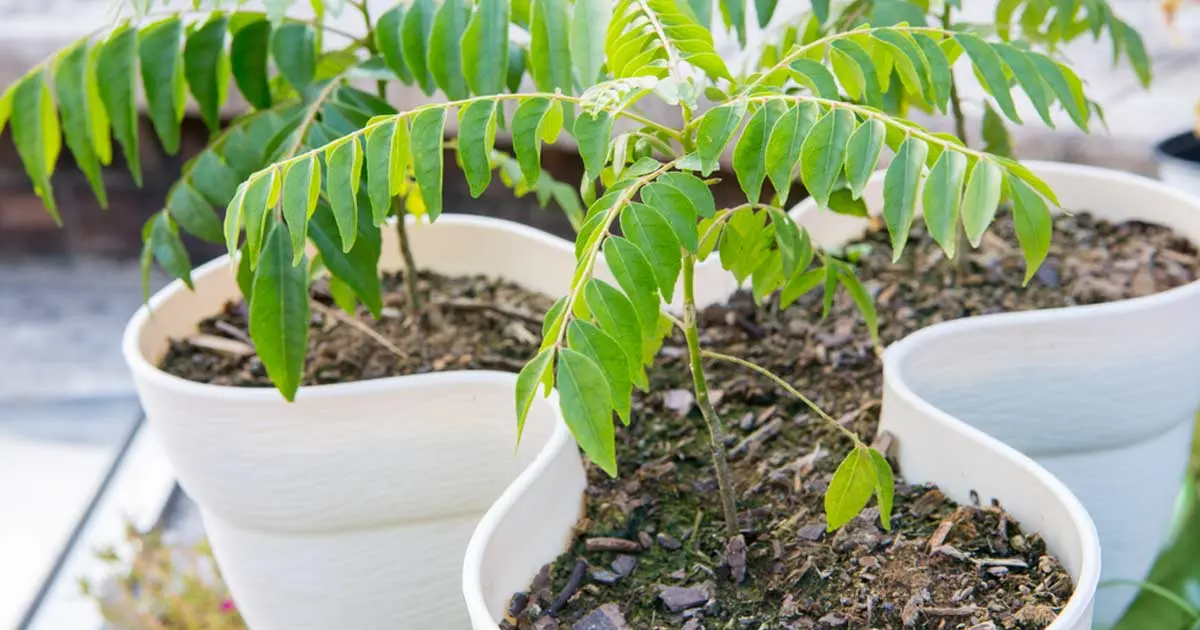
Growing Curry Leaf Plant in Pots: A Complete Guide for Beginners
If you’re a fan of authentic South Asian cuisine, you already know that nothing compares [...]
May
Reviews
There are no reviews yet.